
MysticFate · Metaphysical Knowledge Base · Fundamentals
Understand Each Tool First
The Fundamentals edition clarifies the core concepts of Bazi, calendar systems, fortune cycles, the almanac, I Ching, feng shui, and physiognomy. Each column will continue to expand according to professional publishing standards.
Browse All Articles
Metaphysical Knowledge Base: Bazi, Almanac, I Ching, Feng Shui, and Physiognomy
Bazi Fundamentals
Bazi Fundamentals

Calendars and Time
Calendars and Time

I Ching
I Ching

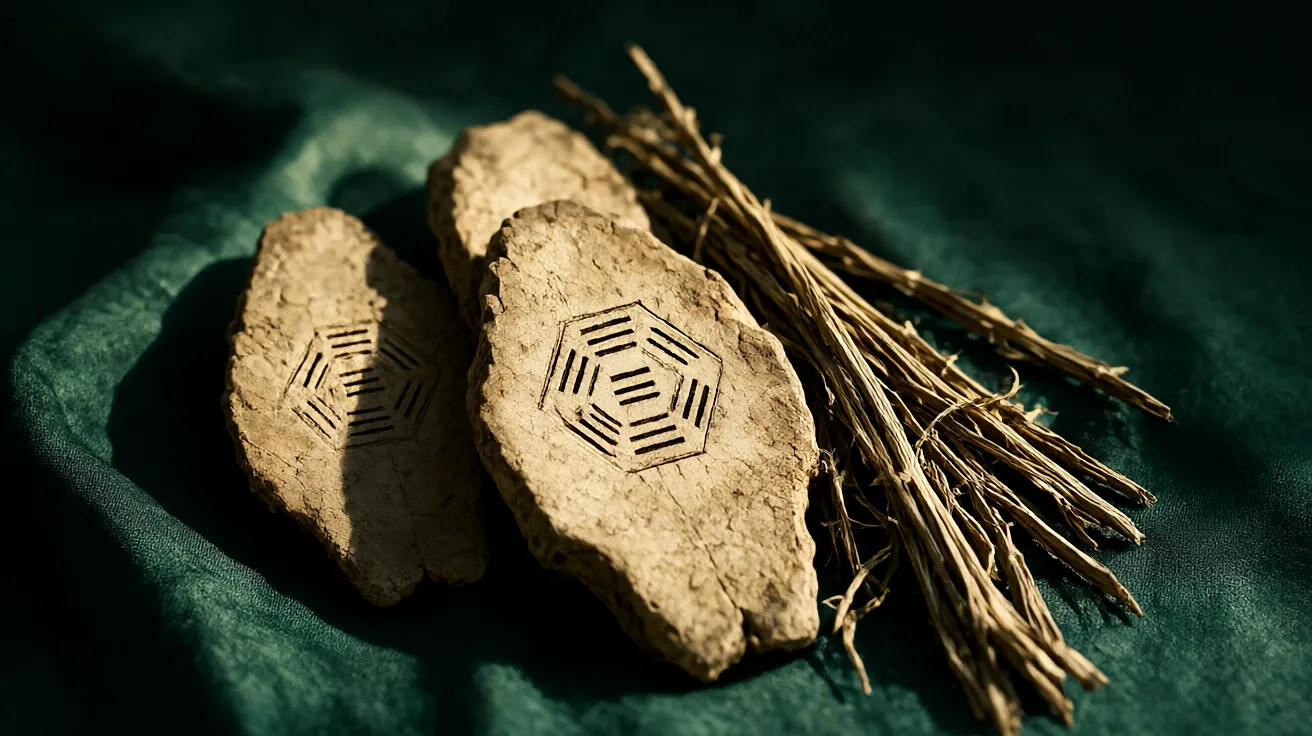
Three Coins, Six Throws: How to Record the I Ching Divination Process
The method is straightforward, but two details are most commonly misunderstood: count the heads first to determine the yao, and build the hexagram from the bottom line upward.
Read the Fundamentals Edition →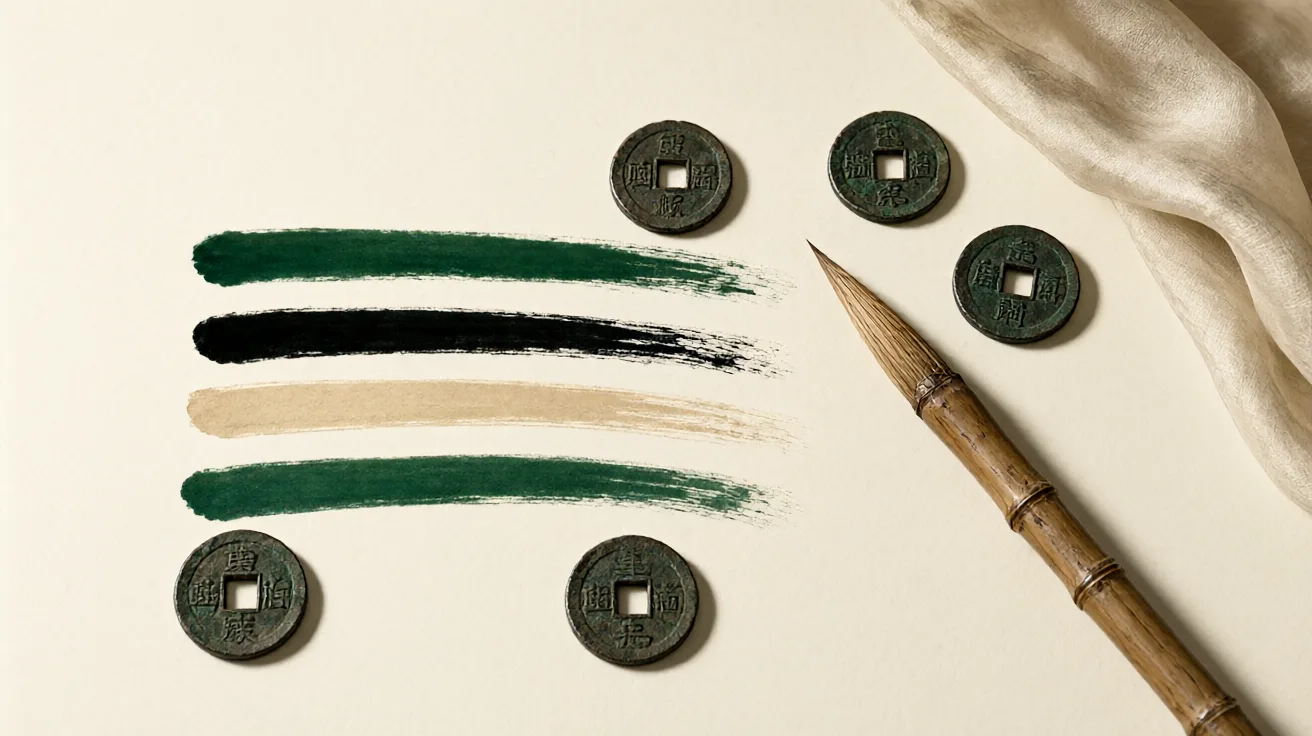
What is I Ching Divination: The Relationship Between Hexagrams, Line Statements, and Change
I Ching divination is not about drawing a single lot. Six lines constitute a hexagram; moving lines introduce change, and interpretation requires the engagement of the specific question, the hexagram, and the real-world context.
Read the Fundamentals Edition →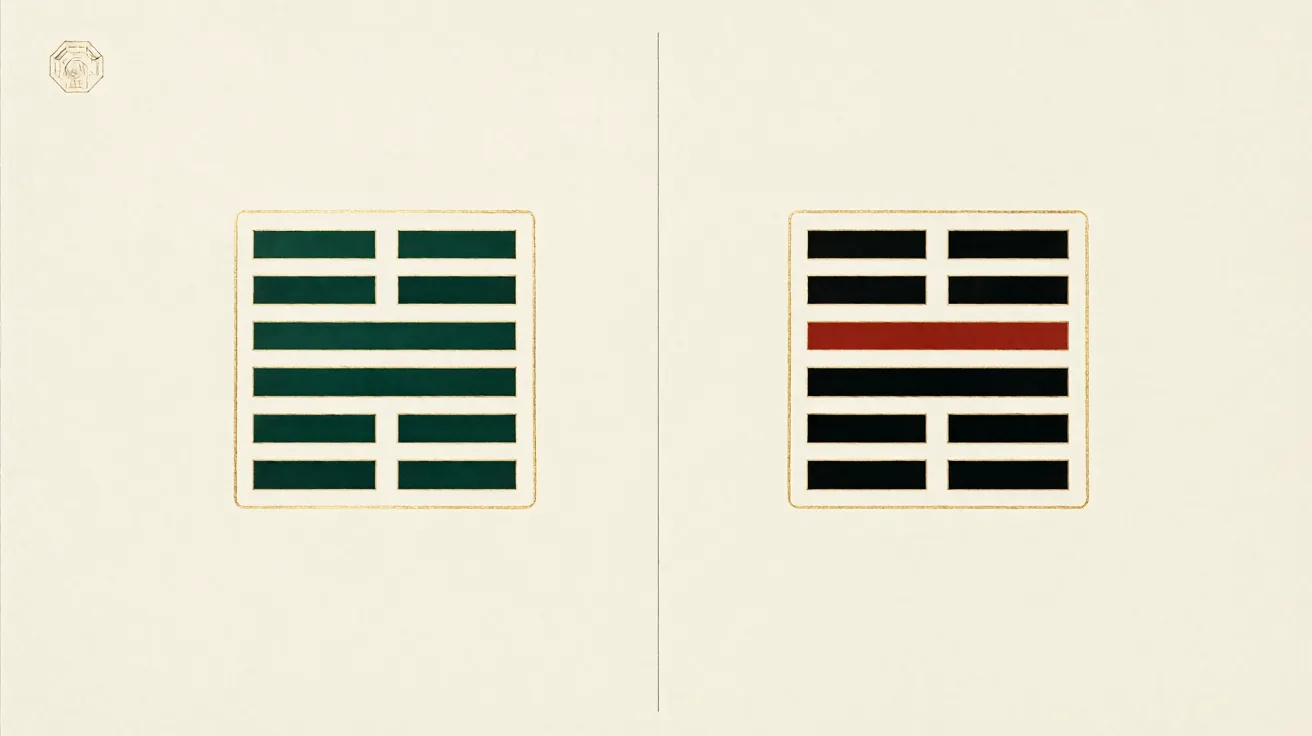
Structure of the Sixty-Four Hexagrams: Upper and Lower Trigrams, Line Positions, and Hexagram Sequence
An analysis of the compositional logic of the Sixty-Four Hexagrams, covering the combination of upper and lower trigrams, yin and yang line positions, textual hierarchy, and common misconceptions regarding the hexagram sequence.
Read the Fundamentals Edition →Almanac
Almanac
Why do different almanacs have varying auspicious and inauspicious activities
The almanac is not a single globally unified table, but a composite result of multiple rule sets. The boundaries for changing days, regional traditions, and activity classifications may all differ.
Read the Fundamentals Edition →
What is the Old Farmer's Almanac: The Layers Composing Daily Information
The almanac contains more than just recommendations and prohibitions. The date, the Heavenly Stems and Earthly Branches, the duty god, constellations, solar terms, and clashing elements collectively form the daily page.
Read the Fundamentals Edition →
Twelve Day Officers: Why Different Activities Have Specific Priorities on the Same Day
An analysis of the rotation logic of the Twelve Day Officers (Jianchu Twelve Day Officers), explaining why the same day presents varying levels of suitability for different matters, and clarifying its distinction from the Yellow and Black Dao system.
Read the Fundamentals Edition →Introduction and Usage
Introduction and Usage

Opening the Secrets of Xuanji: The Complete Path from Guest Mode to Saving Your Chart
When using Xuanji for the first time, following the sequence of entering personal data, viewing results, logging in to save, and then exploring full functionality minimizes the likelihood of overlooking any items.
Read the Fundamentals Edition →
What to do when the birth time is unknown: What is missing in a Three-Pillar chart and what can still be examined
An uncertain birth time does not require forced guessing. First, perform a Three-Pillar reading, then distinguish between content that can be analyzed and content that must be reserved.
Read the Fundamentals Edition →
Choosing Between Solar and Lunar Calendars: The One Thing to Verify Before Entering a Birth Date
The solar and lunar calendars are not simply two names for the same sequence of numbers. Confirming which calendrical system your family members refer to is essential to prevent the entire chart from being misaligned.
Read the Fundamentals Edition →
How to handle the late Zi hour: The practical impact of whether a time after 23:00 is counted as today or tomorrow
Since the Zi hour spans midnight, the criterion for changing the day directly affects the Day and Hour pillars. The key is to first confirm the adopted day boundary, then compare the results.
Read the Fundamentals Edition →
Why Place of Birth Matters: The Impact of Longitude and City Selection on Charts
Place of birth is not a decorative field. Location affects local time and related corrections, particularly near hour-pillar boundaries where changes can alter the result.
Read the Fundamentals Edition →Foundations of Bazi
Foundations of Bazi

What to Look at First After Casting the First Chart: The Reading Order of the Four Pillars, Day Master, Five Elements, and Ten Gods
The first chart does not need to be read in one sitting. Establishing a map according to the order of the Four Pillars, Day Master, Five Elements, and Ten Gods makes the subsequent content easier to understand.
Read the Fundamentals Edition →
What Is Bazi: Why Birth Date and Time, Not Astrological Signs
Bazi is a traditional symbolic system built upon birth timing. It differs from Western astrology in its temporal scale, terminology, and interpretive frameworks.
Read the Fundamentals Edition →
What is the Day Master: Why It Is Closer to "Self" Than the Zodiac Sign
The Day Master is the heavenly stem of the Day Pillar, often serving as the entry point for observing the self. It is not a fixed persona nor can it be interpreted in isolation from the entire chart.
Read the Fundamentals Edition →
What are the differences between major luck cycles, annual flows, and monthly flows?
Major luck cycles represent extended phases, annual flows provide the yearly context, and monthly flows describe intra-year shifts. Their temporal scales differ; they cannot be conflated into a single 'fortune for this year.'
Read the Fundamentals Edition →Basics of BaZi
Basics of BaZi

Foundations of BaZi
Foundations of BaZi

Chart and Functions
Chart and Functions
Chart and Function
Chart and Function

Chart Structure and Functionality
Chart Structure and Functionality

Natal Charts and Functionality
Natal Charts and Functionality

Fortunes
Fortunes

How to Read Daily, Monthly, and Annual Horoscopes Cross-Referentially
Daily readings observe immediate changes, monthly readings reflect phase rhythms, and annual readings provide the long-term backdrop. Establish these layers first, then discuss consistency.
Read the Fundamentals Edition →
When daily, monthly, and yearly fortunes conflict, which layer takes precedence?
Analyze the structural logic of time hierarchies in Bazi destiny theory, clarify the reading order for resolving conflicts among daily, monthly, and yearly cycles, prevent misinterpreting short-term fluctuations as long-term trends, and provide a rigorous cultural model analysis perspective.
Read the Fundamentals Edition →Fortune
Fortune

Feng Shui
Feng Shui

The Fundamental Structure of the Feng Shui Luo Pan: Celestial Pool, Twenty-Four Mountains, and Bagua Rings
The mystery of the luo pan does not lie in the number of rings. Understanding the celestial pool, directional scale, and twenty-four mountains is essential to interpreting the subsequent layers.
Read the Fundamentals Edition →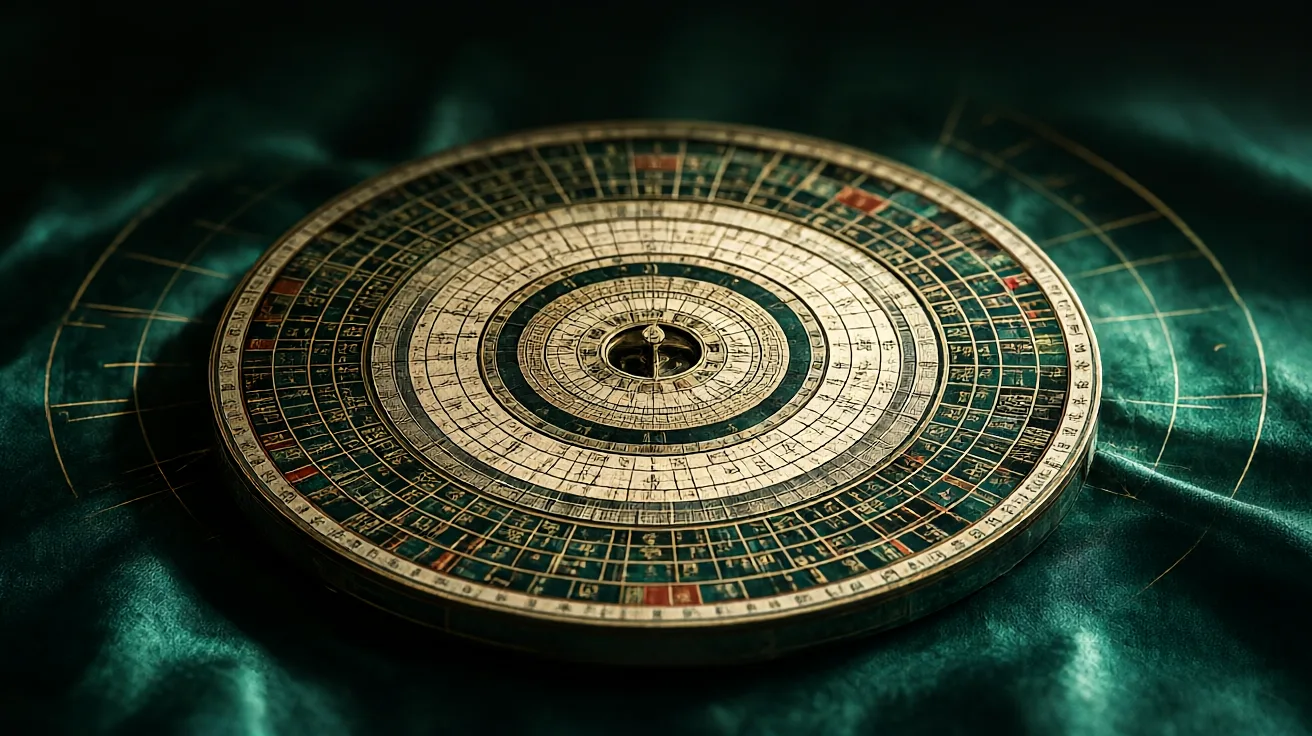
Twenty-Four Mountains Analysis: Layering of Luo Pan Orientations and Interpretations in Traditional Culture
An in-depth analysis of the Twenty-Four Mountains concept in the traditional Chinese Luo Pan, explaining the 15-degree orientation division logic for each mountain, and introducing the multi-layer concentric circular structure of the Luo Pan and the differentiated application boundaries of various schools.
Read the Fundamentals Edition →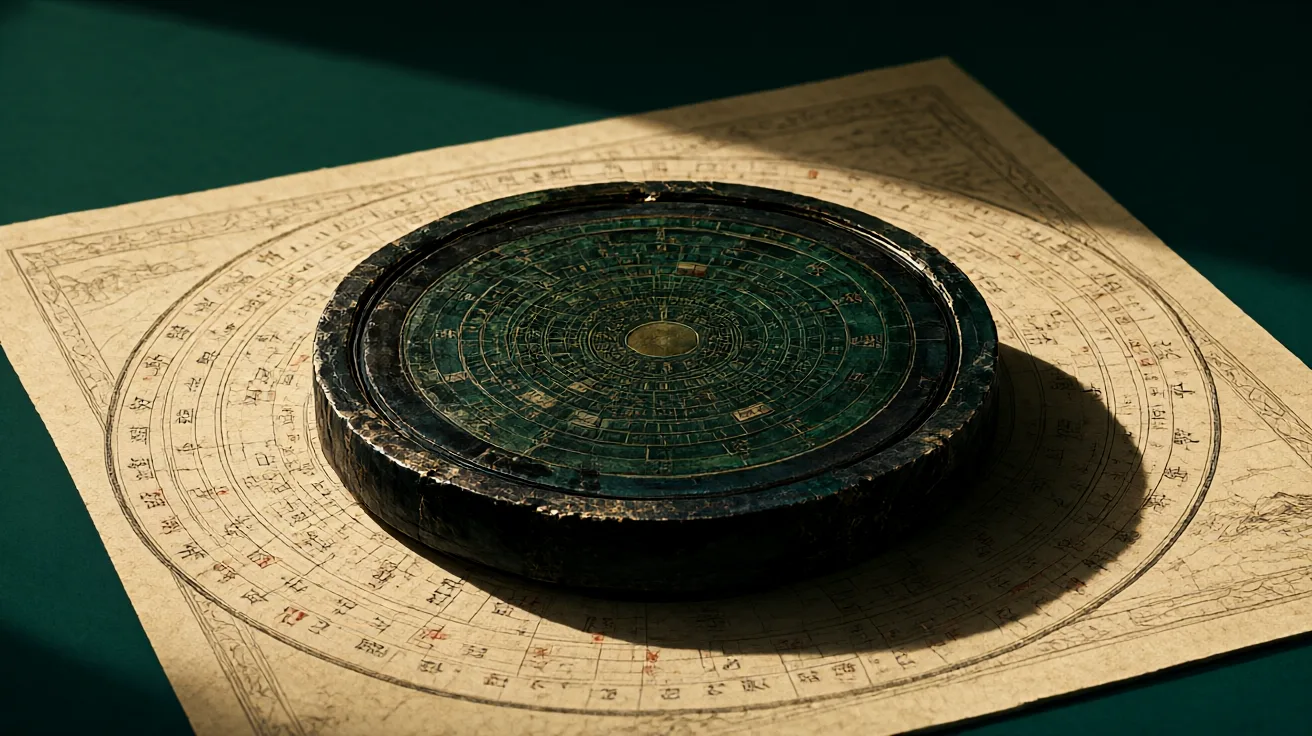
Eight Mansions and Xuan Kong Flying Stars are distinct methods; their conclusions should not be mixed
This section analyzes the fundamental differences between Eight Mansions Feng Shui and Xuan Kong Flying Stars in terms of theoretical foundations, temporal dimensions, and auspiciousness judgments, clarifying why the two systems cannot be superimposed and defining their correct application boundaries.
Read the Fundamentals Edition →Zodiac and Relationships
Zodiac and Relationships
Traditional Physiognomy
Traditional Physiognomy

Advanced Bazi
Advanced Bazi

What are Zang Gan (Hidden Stems): The Five-Element Hierarchy Within the Four Pillar Earthly Branches
Zang Gan (Hidden Stems) move the four pillars from surface five-element counts into internal structure. Understanding primary qi, middle qi, residual qi, month command, and stem exposure before reading the five-element chart provides a steadier foundation.
Read the Fundamentals Edition →
Month Command: The Outline of the Bazi Chart and Interpretation of Seasonal Five-Element Energies
An in-depth analysis of the core role of the Month Command in the Four Pillars Bazi system, explaining how seasons influence the prosperity and decline of the Five Elements, the strength of the Day Master, and the interpretation of hidden stems, helping advanced users understand the concept of 'Receiving the Command' and its cultural context in traditional destiny studies.
Read the Fundamentals Edition →
How to Read the Ten Gods: Prioritize Relational Dynamics Over Personality Labeling
An analysis of the generative logic of the Ten Gods within the Bazi framework. This approach emphasizes distinguishing the structural relationships of Five Elements generation, control, and Yinyang polarity before mapping them to personality or fortune. It guides advanced users in conducting a prudent interpretation by integrating the month command and the overall chart configuration.
Read the Fundamentals Edition →Advanced Ba-Zi
Advanced Ba-Zi

Huangli Almanac
Huangli Almanac
The Yellow Calendar
The Yellow Calendar

Yijing
Yijing

Five Elements
Five Elements
The Five Elements Are Not Five Personalities: Generative and Controlling Dynamics Depend on Position and Conditions
An in-depth analysis of Five Elements generative and controlling relationships as dynamic interaction models rather than fixed personality labels. By examining positional placement, seasonal peaks, structural strength, and flow conditions, this text corrects the misconception that missing elements require automatic supplementation, highlighting the rigorous logical boundaries and cultural nuances of traditional destiny analysis.
Read the Fundamentals Edition →
Does a missing element in the Five Elements require compensation? A triple misreading of quantity, season, and structure
An analysis of common misconceptions regarding missing elements in the Four Pillars of Destiny, exploring why missing elements cannot be simply remedied through accessories or name changes, while emphasizing the importance of seasonal influence, hidden stems, and overall energy flow.
Read the Fundamentals Edition →Advanced Bazi Studies
Advanced Bazi Studies
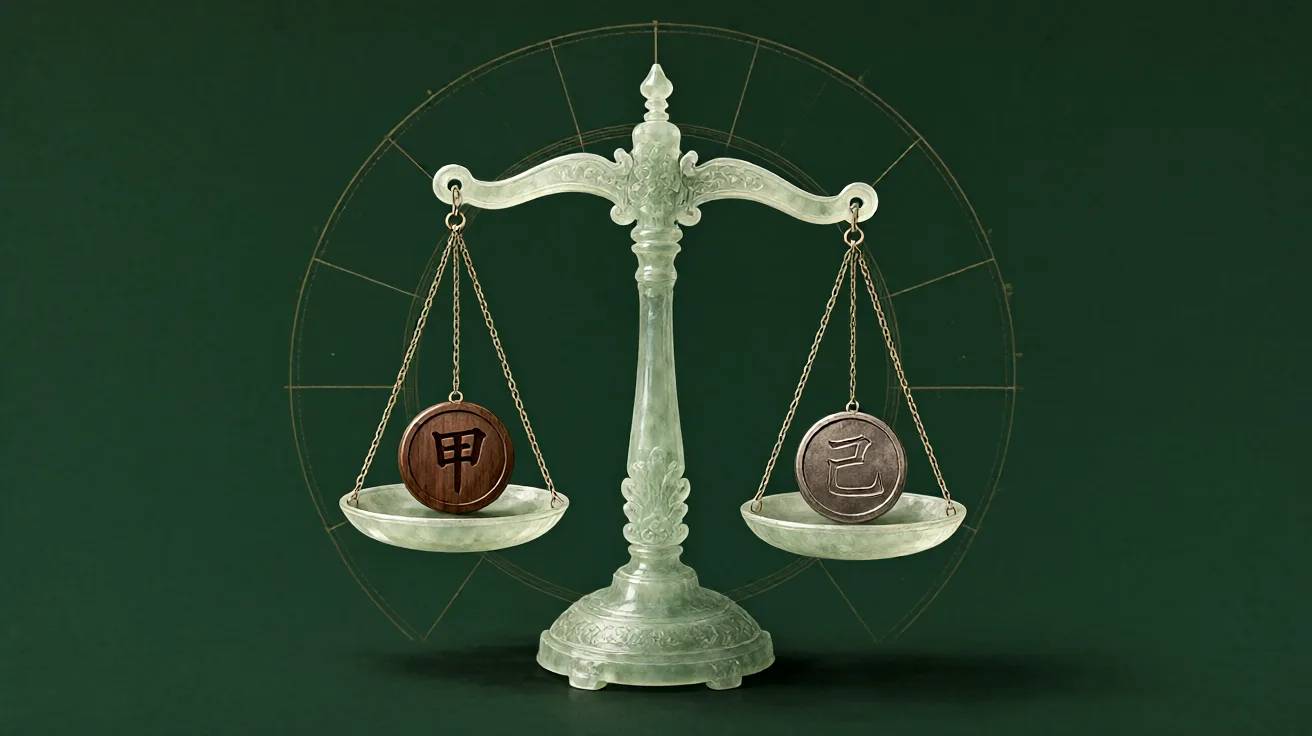
The Five Harmonies of Heavenly Stems and Six Harmonies of Earthly Branches Are Distinct Concepts
An in-depth analysis of the essential differences between the Five Harmonies of Heavenly Stems and the Six Harmonies of Earthly Branches, revealing their distinct levels, targets, and mechanisms of action within Bazi metaphysics. This aims to prevent beginners from conflating concepts and to foster an understanding of the conditions for transformation and the varying interpretive perspectives of different schools of thought.
Read the Fundamentals Edition →
Six Clashes: Why They Are Not Synonymous with Conflict — Perspectives on Dynamic Balance and Misinterpretation Boundaries in Traditional Culture
Unpacking the underlying logic of the Six Clashes in the Bazi system (Zi–Wu, Chou–Wei, Yin–Shen, Mao–You, Chen–Xu, and Si–Hai), explaining why the concept of “clash” is not merely negative, and exploring the multifaceted interpretations of clashes within different structural configurations and states of strength and weakness.
Read the Fundamentals Edition →Bazi Advanced Studies
Bazi Advanced Studies

Advanced BaZi
Advanced BaZi

Marriage Matching
Marriage Matching

Name
Name

Palmistry
Palmistry

The Fundamental Sequence of Palm Reading: Palm Shape, Mountains, and Major Lines
An analysis of the standard reading logic in traditional palmistry, moving from the macro-level palm shape and mountains to the micro-level major lines. This clarifies the boundaries of the cultural model as a reference framework and avoids absolutist interpretations.
Read the Fundamentals Edition →
The Life Line Is Not Lifespan: Boundaries of Traditional Palmistry Terminology
Analyzing the true meaning of the life line in traditional palmistry, clarifying that it reflects vitality and physical constitution rather than actual lifespan, and defining the interpretive boundaries and cultural educational attributes of MysticFate's palmistry features.
Read the Fundamentals Edition →Physiognomy
Physiognomy

The Three Zones and Five Marks: Why Traditional Physiognomy Emphasizes Proportion
An analysis of the proportional logic of the 'Three Zones' and 'Five Marks' in traditional physiognomy, clarifying the boundary between cultural experiential models and scientific criteria, and exploring their symbolic significance in traditional cultural education.
Read the Fundamentals Edition →
Light, Angle, and Age in Physiognomic Reading: An Analysis of Subjective Observation Conditions
Exploring how lighting, camera angles, and age affect visual perception in traditional physiognomy, emphasizing the boundary of face reading as a model of cultural experience rather than an objective criterion.
Read the Fundamentals Edition →Zodiac
Zodiac

What Do the Native Year, Tai Sui, and Offending Tai Sui Mean: An Analysis of Traditional Folk Concepts
Clarifying the definitions and relationships between Tai Sui, the Native Year, and Offending Tai Sui, explaining that they are traditional folk experience models rather than scientific predictive bases.
Read the Fundamentals Edition →
Differences Between Three Combinations, Six Harmonies, and Clashes in Relationship Readings
An analysis of the distinct natures and application boundaries of Three Combinations, Six Harmonies, and Clashes in zodiac relationships, clarifying the misconception that 'Harmony is auspicious and Clash is inauspicious,' and providing an objective interpretive guide from a traditional cultural perspective.
Read the Fundamentals Edition →Calendars
Calendars

Calendar Systems
Calendar Systems

Yi Jing
Yi Jing
Learning