

Why the Use of Kangxi Strokes Is Maintained
Before exploring name structure, the core concept of “Kangxi strokes” must be clarified. The Five Grids analysis method in traditional name numerology is not based on modern simplified characters but strictly on the traditional Chinese character stroke counts recorded in the *Kangxi Dictionary*. This is because the system was established before the popularization of simplified characters, with its numerical model built upon traditional character forms. Using simplified characters for calculation—for instance, the traditional character for “state” (guó) having eleven strokes in Kangxi numerology versus eight strokes in its simplified form—causes fundamental shifts in the Heavenly and Earthly Grids, rendering the entire calculation chain devoid of traditional methodological basis.
Many beginners mistakenly believe that stroke calculation is arbitrary; in reality, it is not. Kangxi strokes include not only the intrinsic strokes of a character but also normalization rules for specific radicals. For example, the water radical may be counted as three strokes when used as a component (氵) or four strokes in its base form (水), depending on the specific character etymology. This rigor aims to ensure maximum consistency in base data across different schools; although variations exist in auspiciousness tables, Kangxi strokes serve as a stable underlying data source, acting as a bridge between traditional philology and numerical deduction.
Numerological Differences Among Homophones with Different Characters
Homophones with different characters are highly representative in name numerology, such as “欣” (xīn) versus “心” (xīn), and “杰” (jié) versus “洁” (jié). Although they share the same pronunciation, their character structures and Kangxi stroke counts differ drastically, resulting in entirely distinct Five Grids combinations. Taking “欣” (eight strokes) and “心” (four strokes) as examples, when placed after the same surname, the values for the Personality and Earthly Grids change, corresponding to different numerological imagery. In traditional interpretation, different combinations are viewed as possessing different “fate tendencies,” which is the core logic behind differing results for homophones.
This variation is not a simple arithmetic difference but involves the generating, controlling, and transforming relationships among the Five Grids. The Heavenly Grid is determined by the surname and remains relatively fixed; however, the Personality, Earthly, External, and Total Grids adjust dynamically with changes in the given name characters. Stroke differences among homophones alter the Five Elements generation and control between the Personality and Earthly Grids. For instance, one homophone may facilitate the generation of the Earthly Grid by the Personality Grid, forming a “harmonious generation” pattern, while another may cause a “clash,” leading to fundamentally different traditional interpretations. This explains why homophones yield divergent results in structural analysis, demonstrating the profound impact of character form on numerology.
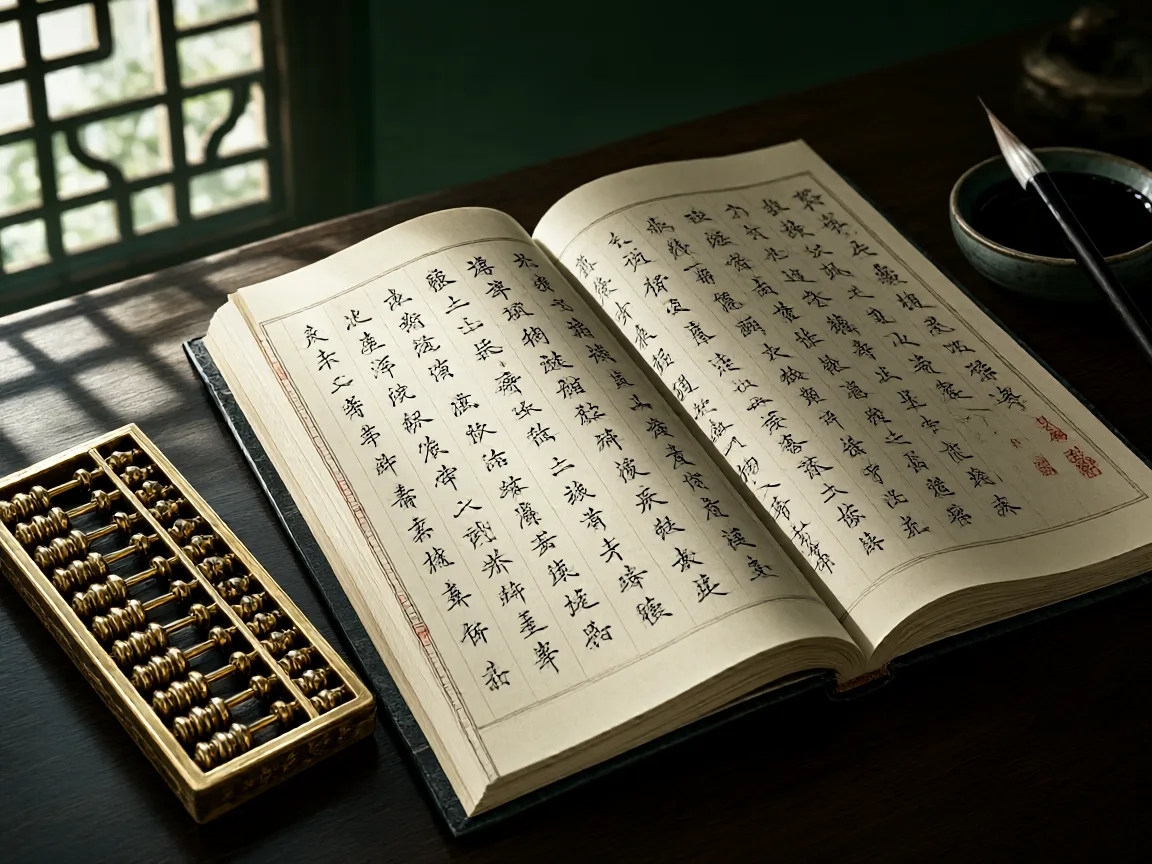
Five Grids Structure and Traditional Numerology Models
The Five Grids analysis method is the primary tool for examining name structure, comprising the Heavenly, Personality, Earthly, External, and Total Grids. The Heavenly Grid is determined by the surname stroke count, representing innate factors; the Personality Grid is the sum of the surname's last character and the given name's first character, representing core fortune; the Earthly Grid is the sum of the given name's stroke counts, representing foundational fortune; the External Grid is derived from the difference between the Heavenly and Earthly Grids, representing external relationships; and the Total Grid is the sum of all name strokes, representing the final outcome. This system constructs a complex symbolic framework using the Five Elements attributes of numbers and auspiciousness tables, attempting to elucidate the potential influence of names on individuals.
It must be noted that the Five Grids system originates from Japanese scholar Mamichi Kumazawa, was later introduced to mainland China, and has been localized into multiple versions and schools. Differences exist among schools regarding auspiciousness tables, criteria for the Three-Heaven configuration, and even stroke normalization rules. For example, some schools deem the number 81 auspicious, while others consider it inauspicious; some prioritize Five Elements generation among the Three Heavens, while others focus on single-grid numerology. Therefore, MysticFate presents only one mainstream reference system, not an absolute truth. Users should recognize this as a dimension of traditional cultural analysis rather than a scientific standard, acknowledging that conflicting interpretations across versions are a normal phenomenon in the transmission of traditional knowledge.
How to Interpret in MysticFate
In MysticFate's name analysis feature, after users input a name, the system first displays the Kangxi stroke count for each character, explicitly labeling it as “non-simplified strokes” to ensure the accuracy of the calculation base. Subsequently, the interface presents a structured chart of the specific values for the Heavenly, Personality, Earthly, External, and Total Grids, along with the corresponding Three-Heaven configuration. Below each grid, traditional numerological names (such as “Leader Fortune” or “Auspicious/Inauspicious” indicators) are displayed; these prompts are sourced from traditional name numerology literature, intended to provide cultural context rather than absolute predictions.
The interface features a specific “Homophone Comparison” module, allowing users to input homophones with different characters for real-time comparison of strokes and Five Grids. For example, entering “Li Xin” (with “欣”) versus “Li Xin” (with “心”) instantly displays the numerical differences in their Personality and Earthly Grids and corresponding traditional imagery prompts. This visual design helps users intuitively understand structural differences between “homophones with different characters.” While users can observe specific numerical changes, it is important to note that the app does not provide “auspiciousness judgments,” only “traditional reference interpretations,” to prevent misleading users into believing that numbers dictate fate.
School Variations and Version Issues
Name numerology is not monolithic; significant differences exist among schools regarding Five Grids calculation details and auspiciousness judgments. For instance, regarding radicals like fire or water, some schools apply special normalization methods when calculating Kangxi strokes, causing the same character to have stroke counts differing by one or two across schools, thereby altering the entire Five Grids structure. Furthermore, there are numerous versions of auspiciousness tables, some based on 81 numbers and others extending to larger ranges; judgments for the same number (such as 26 or 49) may be completely opposite. This divergence is an inherent aspect of traditional knowledge transmission. During development, MysticFate selected one widely circulated version as the baseline and indicated “based on mainstream traditional schools” in the interface.
If users find discrepancies between MysticFate and results from other books or websites, this is usually due to school differences or variations in stroke normalization rules rather than calculation errors. For example, some older publications may not strictly use Kangxi strokes or may mix simplified and traditional characters, leading to deviations. MysticFate strictly uses standard Kangxi strokes to provide consistent reference data. Users should understand that there is no “unique correct” Five Grids system, only “relative accuracy” within specific school frameworks. When comparing results across schools, users must first verify the stroke standards and auspiciousness table versions to avoid invalid comparisons.
Common Misconceptions and Boundaries
The primary misconception is viewing Five Grids numerology as a “fate-altering” tool. Many believe that changing one's name to characters with “auspicious” strokes can reverse life's trajectory and bring wealth or status. This conflates traditional cultural symbols with the laws of causality. Name numerology is a philosophical system based on ancient “image-number” thinking, where “auspiciousness” largely reflects psychological suggestion and cultural identity rather than physical determinants. MysticFate explicitly emphasizes that name analysis is for cultural reference only; it guarantees nothing about changing one's fate or replacing personal effort, choices, and historical context. Any claim that “using a specific character guarantees wealth” is pseudoscience and contradicts the intent of traditional cultural education.
Another misconception is neglecting character meaning and phonetics in favor of strokes alone. A name with “auspicious” stroke numerology but vulgar meaning or awkward pronunciation causes social or psychological discomfort, violating the traditional principle of balancing “sound, form, meaning, and number.” While MysticFate focuses on displaying Five Grids structure, it consistently advises users to consider character meaning. The boundary is clear: the app provides “structural analysis,” not “aesthetic judgment” or “fate guarantees.” Users should not abandon a preferred name merely because its numerology is “inauspicious,” nor force the use of obscure or hard-to-pronounce characters because they are “auspicious.”
Viewing Traditional Cultural References Rationally
Placing Kangxi strokes and Five Grids analysis within a broader cultural perspective reveals them as applications of the traditional Chinese concepts of “unity of heaven and humanity” and “image-number thinking” in the field of names. It is not merely a calculation method but a cultural expression reflecting ancient pursuits of order, harmony, and balance. Understanding this helps users move beyond binary “auspicious/inauspicious” dichotomies and re-examine names from aesthetic, philosophical, and cultural identity perspectives. Each set of numerology displayed by MysticFate serves as an entry point to understanding this traditional thinking, not an endpoint. Users should appreciate its logical beauty with an open yet critical mindset, rather than blindly following its conclusions.
In modern contexts, the value of name analysis lies more in psychological suggestion and cultural connection. A name that aligns with traditional aesthetics and numerical harmony may enhance individual self-identity and confidence; this psychological effect is real but stems from subjective perception, not supernatural power. MysticFate uses visualized traditional data to help users build this cultural connection without exaggerating its efficacy. Rational viewing means acknowledging its cultural value while adhering to scientific common sense, not using it as a basis for major life decisions such as investment, medical treatment, or legal matters.
Frequently Asked Questions
Why do homophones yield different results in Five Grids analysis?
Because Five Grids analysis is based on Kangxi stroke calculations. Homophones with different characters often have different structural forms and stroke counts, leading to changes in values for the Heavenly, Earthly, and other Grids, which correspond to different traditional numerological imagery. This reflects the influence of character form on the numerical model, not pronunciation.
Are MysticFate's Five Grids results absolutely accurate?
They are not absolutely accurate. The Five Grids system has multiple schools and versions, with differences in auspiciousness tables and stroke normalization rules. The app presents a mainstream traditional reference, aiming to educate users on structural differences rather than providing a unique truth or fate prediction.
If a character's Kangxi stroke count is labeled “inauspicious,” can it not be used?
Not necessarily. Traditional name numerology values a balance of sound, form, meaning, and number; a pleasant meaning and pronunciation can offset numerical influences. Moreover, “inauspicious” is merely a tendency recorded in traditional literature, not a scientific conclusion. Users should make decisions based on character meaning, personal preference, and cultural context, and should not blindly discard a character.
What is the difference between simplified character strokes and Kangxi strokes?
Simplified character strokes are modern standards, while Kangxi strokes are the traditional original forms. Since the Five Grids system originates from the Qing dynasty, Kangxi strokes must be used. Using simplified characters leads to numerical errors, collapsing the foundation of the Five Grids derivation and rendering results devoid of traditional significance. The app displays only Kangxi strokes to ensure methodological integrity.
Go Deeper
This is the Fundamentals introduction. Future updates will add etymologies of key terms, differences among schools of thought, verifiable reference methods, and common misconceptions—following professional publishing standards.