

Establishing Direction via the Celestial Pool
The central celestial pool serves to observe the magnetic needle and establish a directional baseline. Users must first ensure the instrument or face is level and confirm that calibration and magnetic declination are properly set.
Mobile phone compasses are susceptible to interference from nearby metals, magnets, electronic devices, and handheld angles. Interfering objects should be removed, and calibration completed according to instructions before taking measurements.
The Twenty-Four Mountains Subdivide Eight Directions
The eight cardinal directions are further divided into twenty-four sectors, each spanning fifteen degrees. This system allows for more precise directional descriptions than simple compass points and facilitates recording the orientation of entrances.
When reading the twenty-four mountains, first determine whether the system uses degrees or specific school-specific directional names. Different rings may simultaneously display Bagua, Heavenly Stems and Earthly Branches, and Flying Star information.
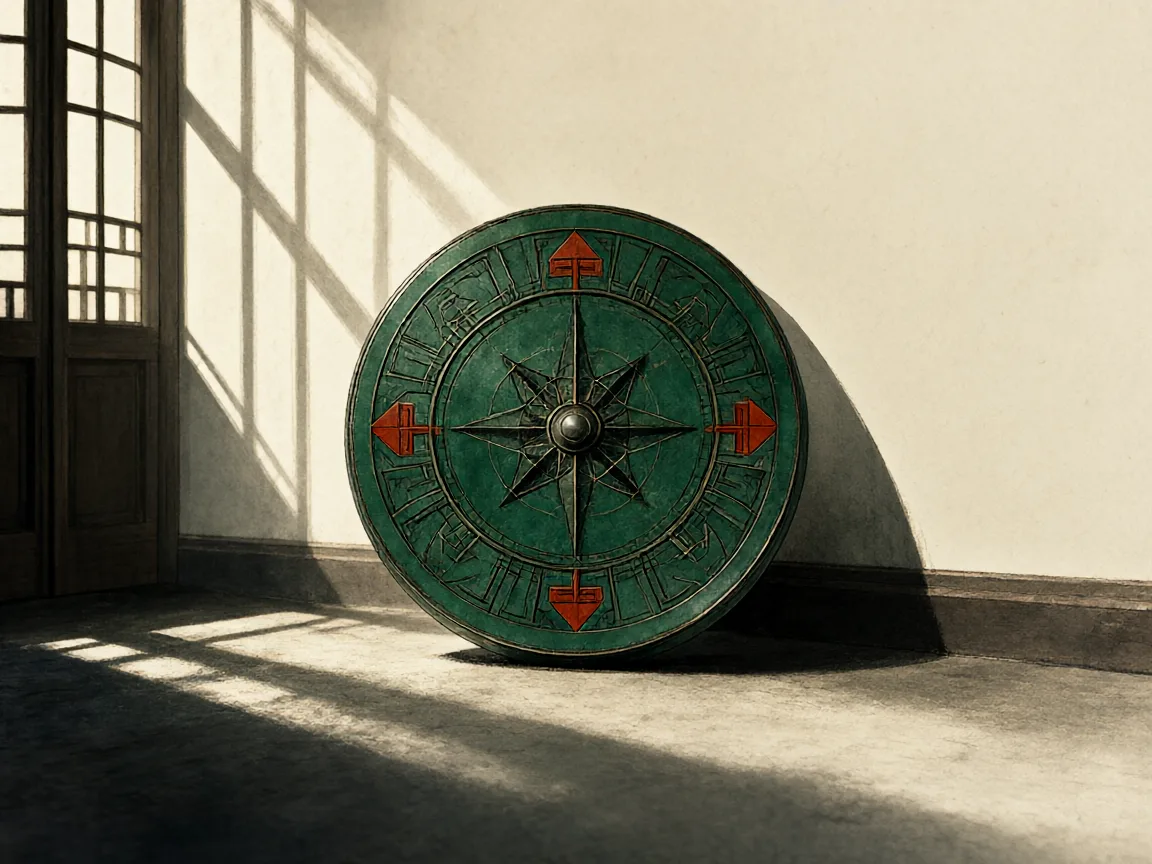
More Rings Do Not Necessitate Comprehensive Simultaneous Review
Beginners are often intimidated by the complex, multi-layered structure of the luo pan. In practice, one may initially focus on the celestial pool and twenty-four mountains, then consult Flying Star, Bagua, or directional explanations based on the chosen methodology.
Feng Shui assessments also depend on the house orientation, entrance placement, room layout, and natural lighting. A single angle cannot determine the overall quality of a property.
Application Within Metaphysical Contexts
The app provides a digital luo pan, twenty-four mountains, AR overlays, and measurement logging. Users should first calibrate the device, place the phone flat on the measurement location, and save readings for verification.
The basic version begins with ensuring accurate measurement and clear interpretation; advanced features such as Nine Palace Flying Stars and various home scenarios will be introduced subsequently.
Frequently Asked Questions
Can a mobile phone compass achieve accuracy comparable to a professional luo pan?
While mobile sensors are convenient, their precision is affected by device hardware, calibration, and environmental interference; cross-verification is necessary.
Does the luo pan's indication directly correspond to the house's sitting direction?
One must distinguish between sitting and facing, integrating the entrance and measurement location; relying on a single reading is insufficient.
Go Deeper
This is the Fundamentals introduction. Future updates will add etymologies of key terms, differences among schools of thought, verifiable reference methods, and common misconceptions—following professional publishing standards.