Complete the Six Throws
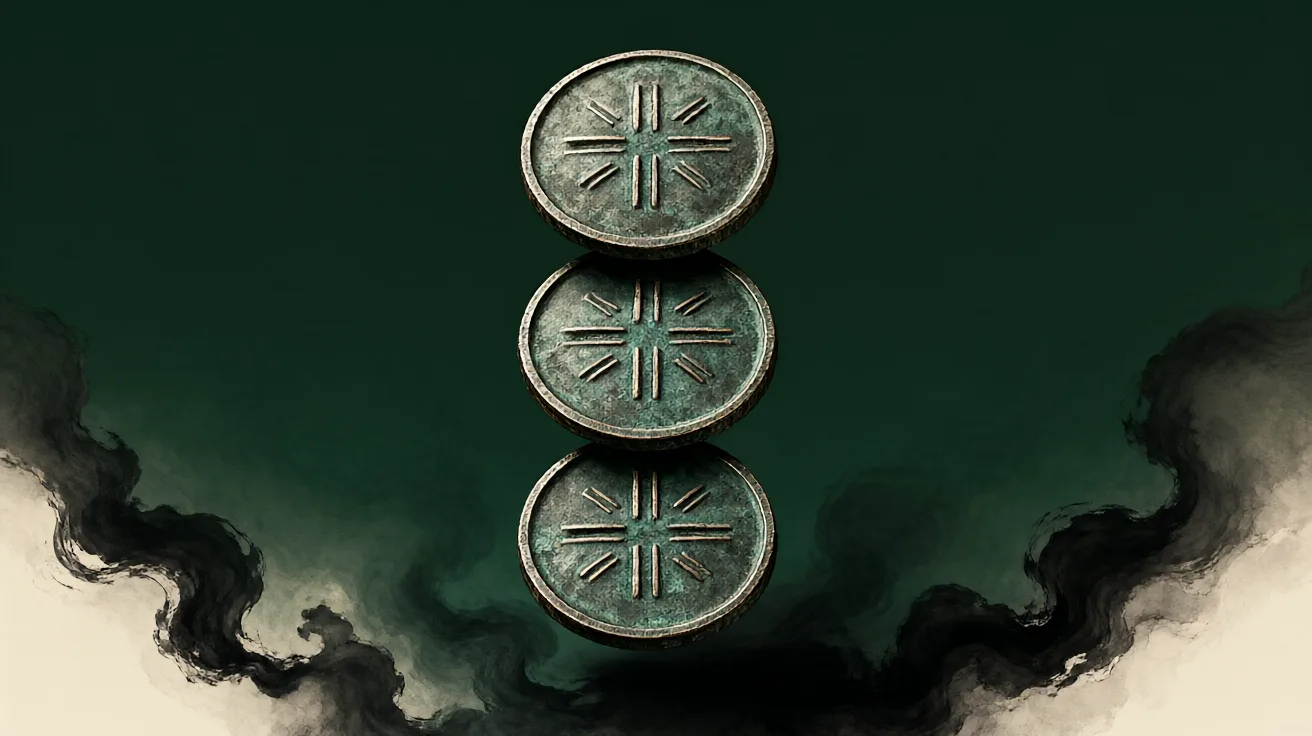
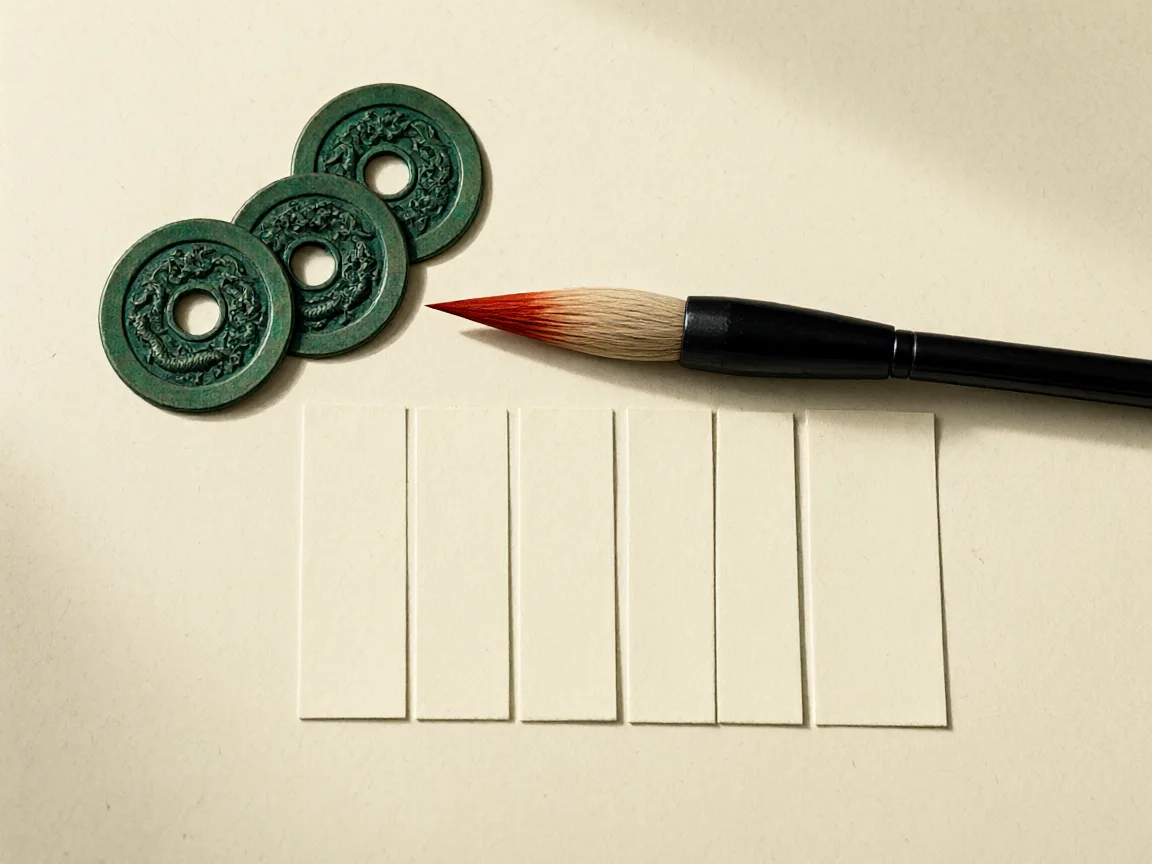
Prepare three identical coins. Before beginning, establish the rule: this method counts the number of heads. Throw all three coins together, record the result for that throw, and repeat until you have completed six throws.
Clarify the specific question before the first throw. "What should I be mindful of regarding this matter?" is generally more suitable for traditional divination than demanding a precise future event.
Converting Heads to Yao
Three heads equal 9, an older yang line, which is a moving yao represented by a solid line. Two heads equal 8, a younger yin line, which is a static yao represented by a broken line. One head equals 7, a younger yang line, which is a static yao represented by a solid line. Zero heads equal 6, an older yin line, which is a moving yao represented by a broken line.
Yao containing 6 or 9 transform from the primary hexagram into the resultant hexagram; if none of the six yao are 6 or 9, there is no resultant hexagram.
Building the Hexagram from the Bottom Line Upward
Record the first throw at the very bottom and the sixth throw at the very top. Even if all six results are correctly noted, reading the sequence in reverse will produce a different hexagram.
The random divination button automatically generates the same six yao values. It is suitable for study and cross-reference, but should not be described as a physical coin toss.
Frequently Asked Questions
Must I Use Ancient Inscribed Coins?
No. Three identical coins will suffice, provided you consistently apply the same rule for recording heads and tails.
What If All Six Yao Are Static?
Read only the primary hexagram; no resultant hexagram is generated.
Go Deeper
This is the Fundamentals introduction. Future updates will add etymologies of key terms, differences among schools of thought, verifiable reference methods, and common misconceptions—following professional publishing standards.