

The Original Chart: The Static Baseline of Fate
In analyzing the original chart, we first focus on the Four Pillars constructed at the moment of birth. This is the static presentation of an individual's foundational destiny, encompassing the generative and controlling relationships among the Five Elements of the Heavenly Stems and Earthly Branches, as well as the punishments, clashes, combinations, and harms between the Day Master and other characters. The original chart serves as a fixed coordinate system; it does not change with time but acts as the baseline reference for all subsequent dynamic analyses.
The key to understanding the original chart lies in grasping its internal state of balance or imbalance. For instance, if a specific element is excessively strong or weak within the original chart, this constitutes a long-term constitutional characteristic of the destiny. From the perspective of MysticFate, the original chart provides the initial energy distribution map, serving as the soil that interprets the subsequent effects of major cycles and annual flows. Without an accurate understanding of the original chart, subsequent dynamic analysis lacks a foundation.
Major Cycles: The Macro Background of Ten-Year Stages
The major cycle is the first dynamic layer on the temporal axis, operating on a ten-year cycle. It represents the macro environment or climate of different life stages. For example, if a person's major cycle enters a Fire phase, the energy of the Fire element is amplified in their life trajectory during that decade, and Five Element interactions related to Fire within the original chart become dominant. The function of the major cycle is akin to setting a ten-year keynote, determining which opportunities are more likely to emerge and which challenges are more prominent during that period.
From the perspective of MysticFate, the major cycle does not operate independently but generates new forces through stem-branch combinations with the original chart. For example, if the Earthly Branch of the major cycle forms a combination with the Earthly Branch of the original chart, it may strengthen a specific Five Element; if it forms a clash, it may disrupt the original balance and bring about change. This decade-level background shift provides a specific stage for the annual flow. Different schools of thought vary in calculating the age of onset for major cycles, with some deriving it from the month command and others from solar term transitions. This affects the starting point of the major cycle, but its structural role as a ten-year background is universally acknowledged.
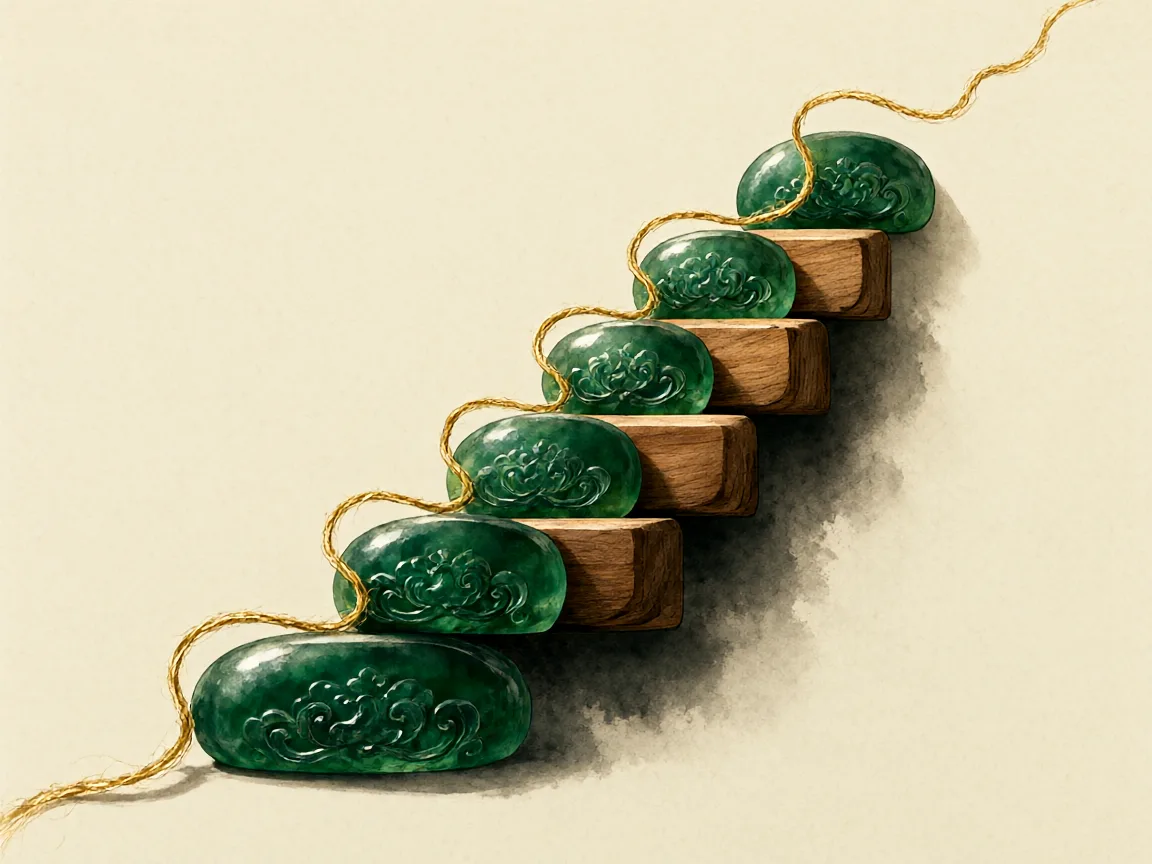
Annual Flows: The Micro Focus of Annual Triggers
The annual flow is the second dynamic layer on the temporal axis, operating on a one-year cycle, specifically referencing the Heavenly Stems and Earthly Branches of each year. It represents the trigger or event clues occurring in the current year. Unlike the major cycle, which provides a prolonged background, the annual flow precisely targets the activation of specific Five Elements in a given year. For example, if the Heavenly Stem of the annual flow reveals a Ten God that was previously latent in the original chart or major cycle, that year may witness significant movements in financial matters.
From the perspective of MysticFate, the function of the annual flow lies in the tripartite relationship it forms with the major cycle and the original chart. The stems and branches of the annual flow interact with those of the major cycle and original chart through combinations, clashes, punishments, and harms. These micro-level interactions, superimposed on the macro background of the ten-year major cycle, collectively shape the specific experience of that year. The annual flow is a concrete enactment of the major cycle's background, translating macro trends into perceivable details within a specific year.
The Coordination Logic of Three Hierarchies: Synergy Between Background and Trigger
The original chart, major cycle, and annual flow constitute a complete temporal hierarchy system, progressing from static to dynamic and from macro to micro. They are not interchangeable, as each performs a distinct function. The original chart defines who you are, the major cycle defines the environment you are in, and the annual flow defines what you encounter this year. Attempting to use the annual flow to explain decade-long trends, or using the major cycle to summarize the specifics of a single year, results in hierarchical confusion and misinterpretation.
The correct method of reading is to first establish the baseline of the original chart, then examine the ten-year keynote set by the major cycle, and finally use the annual flow as the specific event trigger under that keynote. For example, if the major cycle is a period of strong Metal and the original chart has Earth generating Metal, the overall background is an intensification of Metal energy. If the annual flow encounters Water, which controls Fire and generates Wood, the Metal energy in that year may become cold due to excess Water, or require Fire for climate regulation. This necessitates attention to the balance of warmth and cold in specific matters of that year. Only through this layered interpretation can the true effect of time on the destiny be restored.
Priorities of Stem-Branch Combinations and Clashes, Punishments, and Harms
When analyzing interactions across the three hierarchies, the relationships of combination, clash, punishment, and harm between stems and branches are core mechanisms. However, not all relationships hold equal importance; there is an inherent logic of priority. Typically, the direct force between the annual flow and the major cycle outweighs that between the annual flow and the original chart, because the major cycle constitutes the current environment in which the annual flow occurs. For example, if the annual flow clashes with the major cycle, this conflict manifests more intensely in that year, as it disrupts the stable decade-long background.
Simultaneously, combinations often exert binding or transformative effects, while clashes bring turbulence or release. When multiple clashes and combinations coexist, one must observe whether they form complex scenarios such as a combination containing a clash or a clash breaking a combination. From the perspective of MysticFate, understanding these priorities and interactions is key to judging the specific dynamics of a year. Note that different schools of thought may vary in their ranking of the severity of punishments, clashes, and harms, with some emphasizing direct generative and controlling actions of the Heavenly Stems and others focusing on the latent effects of the Earthly Branches. Readers must maintain consistency within their chosen system.
Common Misconceptions and Boundaries
A common misconception is believing that an inauspicious major cycle guarantees an entirely inauspicious year, or that an auspicious annual flow ensures smooth sailing in all matters. In reality, the auspiciousness or inauspiciousness of a major cycle must be evaluated in conjunction with the annual flow. If the major cycle is unfavorable but the annual flow triggers its control or transformation, the situation may turn from crisis to safety; conversely, if the major cycle is favorable but the annual flow activates an unfavorable Ten God, setbacks may occur. Another misconception is conflating actions from different levels, such as attributing static deficiencies in the original chart directly to the trigger of a specific annual flow while ignoring the impact of the major cycle background.
Regarding boundaries, it must be stated clearly: this article aims at structural analysis, does not predict specific events, makes no guarantees of fortune or misfortune, and is not intended for medical, legal, investment, or psychological diagnosis. Ba-Zi analysis is a symbolic system within traditional culture, valued for providing a framework for self-reflection rather than fatalistic determinism. Academic differences exist among schools of thought regarding judgments of strength and weakness and methods of calculating the onset of major cycles. Readers should be aware of these divergences and avoid treating the conclusions of any single school as absolute truth.
How to Use MysticFate
When using the MysticFate Ba-Zi tool, it is advisable to follow a reading logic progressing from static to dynamic. First, prioritize examining the structure of the original chart, identifying the static characteristics of the Day Master's strength and the distribution of the Five Elements, which serves as the foundation for all subsequent analysis. Second, transition to the major cycle stage, examining the stem-branch combinations of the current or target ten-year major cycle to understand the continuous impact of this macro energy field on the original chart. This step aims to establish the long-term background keynote, not to find single-point events.
Third, overlay the current annual flow and observe how its stems and branches intervene in the interaction between the original chart and the major cycle. At this stage, compare across three layers: background, trigger, and reception. Background refers to the climate set by the major cycle, trigger refers to the immediate fluctuations caused by the annual flow, and reception refers to the original chart's capacity to absorb or transform these fluctuations. Remember, interface labels serve only as navigational indexes and should not be equated directly with conclusions about specific life events. Interpreting stem-branch relationships as a symbolic system prevents mechanical correspondence and fosters rational reflection.
Frequently Asked Questions
Which Has a Greater Influence: Major Cycles or Annual Flows?
Both operate on different time scales and cannot be simply compared in magnitude. The major cycle sets the decade-long background, while the annual flow triggers yearly events. The intensity of influence depends on specific stem-branch interactions; annual flows often feel more immediate due to their proximity to the present, but the sustained force of the major cycle must not be ignored.
Do Differences Exist in Onset Ages Among Schools of Thought?
Yes. Some schools calculate the onset time precisely based on solar terms, while others simplify it to whole years or months. These differences affect the starting point of the major cycle, but the core logic remains unchanged. It is recommended to adopt the system's default onset method in MysticFate to maintain consistency.
What If Both the Major Cycle and Annual Flow Clash with the Original Chart?
When both the major cycle and the annual flow clash with a specific character in the original chart, the Five Element or palace represented by that character undergoes drastic change in that year. One must observe whether the clash targets an unfavorable Ten God or a favorable one, and if other characters intervene to resolve the clash through combinations. This multiple conflict often signifies a major turning point or challenge in that domain.
What Misinterpretations Does Hierarchical Confusion Cause?
Misjudging the transient fluctuations of the annual flow as decade-long trends, or misunderstanding the long-term background of the major cycle as specific events of a single year, leads to biased judgments. The correct approach is to interpret layer by layer: first view the major cycle to set the keynote, then view the annual flow to find trigger points, and finally consider the original chart to assess its capacity to withstand change.
Go Deeper
This is the Fundamentals introduction. Future updates will add etymologies of key terms, differences among schools of thought, verifiable reference methods, and common misconceptions—following professional publishing standards.