
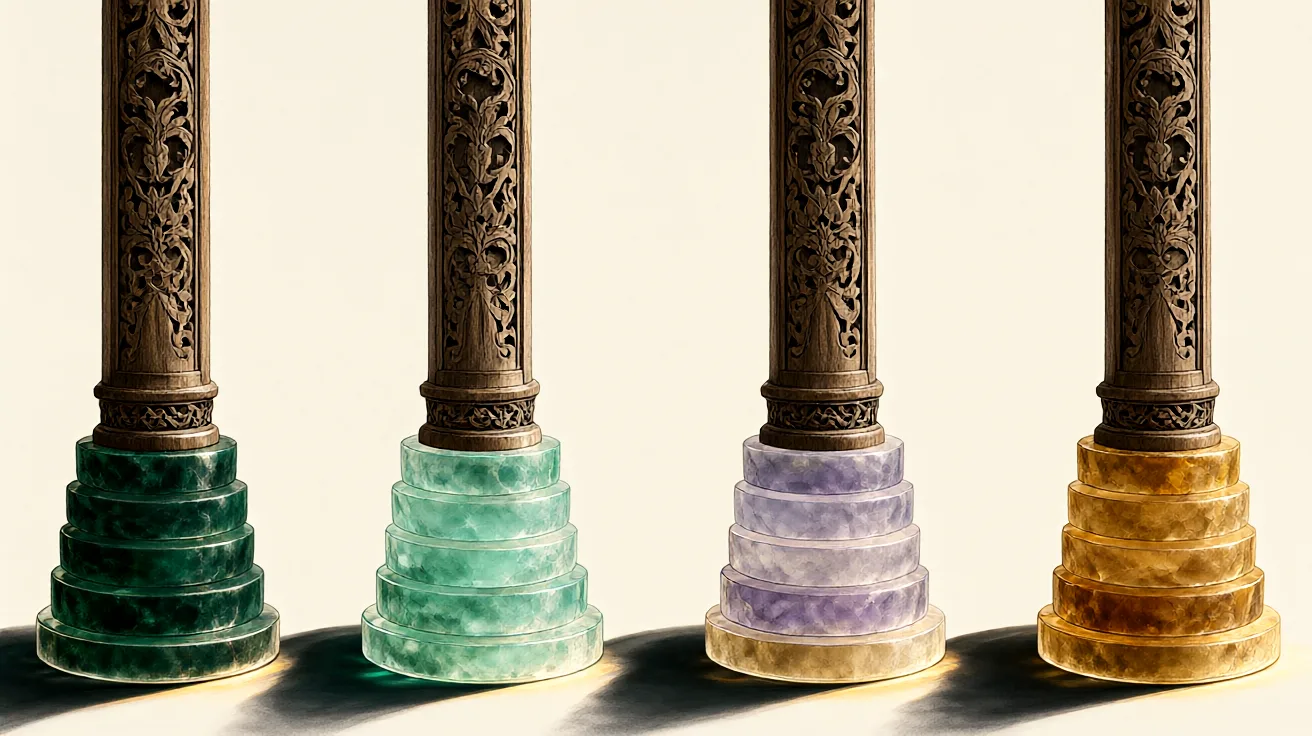
Zang Gan (Hidden Stems) are Heavenly Stems within Earthly Branches
The surface of the four pillars consists of Heavenly Stems and Earthly Branches. Stems are perceived as the manifested, direct aspect, while branches represent layers carrying seasonal, directional, and internal influences. Zang Gan (Hidden Stems) are the Heavenly Stems contained within Earthly Branches in traditional destiny studies, also known as Human Stems.
An Earthly Branch may contain only one Zang Gan, or two to three. These do not add extra pillars; rather, they explain why a single branch possesses different five-element influences of varying hierarchy. For instance, the primary qi of Yin is typically recorded as Jia Wood, while concurrently holding components of Bing Fire and Wu Earth.
The significance of Zang Gan is not to uncover mysterious answers concealed in darkness, but to expand the simple statement that a branch belongs to Wood into an analysis of internal composition and seasonal context.
Primary, Middle, and Residual Qi Are Not Equally Distributed
Traditionally, Zang Gan are categorized into primary qi, middle qi, and residual qi. Primary qi represents the dominant five-element force of the branch and is usually the first layer observed when determining its nature. Middle and residual qi occupy auxiliary positions, representing transition, sprouting, or residue during seasonal shifts.
These layers must not be mechanically interpreted as three identical fractions. Different branches have varying combinations of Zang Gan, and the relationship between primary and secondary qi differs accordingly. One should first identify the Heavenly Stems within each branch, then understand their hierarchy, rather than simply summing all Zang Gan.
If one only counts five-element quantities, a superficial impression such as "two Wood and one Fire" may emerge. Incorporating Zang Gan reveals that elements with identical counts carry different weights depending on season, position, and degree of manifestation.
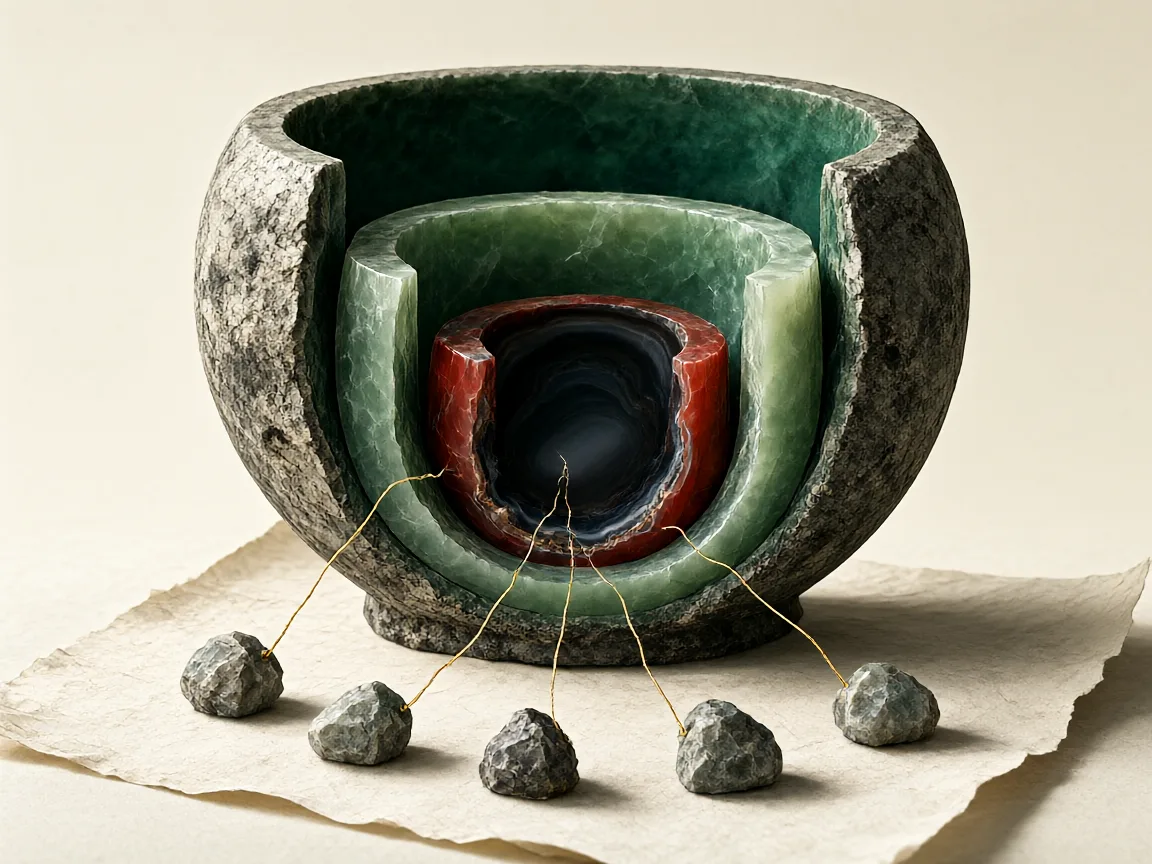
The Month Command Determines the Environment of Zang Gan
Zang Gan cannot be judged in isolation from the month command. The month command corresponds to the solar term of the birth month, determining which five-element is in season and influencing whether other Zang Gan are in season, out of season, generated, or controlled.
Wood Zang Gan in spring versus autumn require different reading emphases. The former is closer to being in season and flourishing, while the latter requires observing whether it receives Water support or is restrained by Metal, and whether the Heavenly Stems draw branch strength to the surface.
Therefore, Zang Gan are not fixed labels. They must be viewed alongside the three pillars, the month command, Heavenly Stems, and other branches in the chart. Assigning Zang Gan as strong, weak, good, or bad without context risks reducing structural relationships to a simple list.
Stem Exposure Moves Internal Strength to the Surface
When a Zang Gan in a branch corresponds to a Heavenly Stem of the same five-element, it is often called stem exposure or transference. This indicates that internal branch strength has a surface counterpart, allowing for more direct observation of how this element participates in the chart.
It is necessary to note that different schools have varying standards for determining stem exposure, including distance, position, and whether the stem and branch must be in the same pillar. Some emphasize adjacent positions, while others consider the month command and the entire stem-branch set. When an app or book highlights a transference relationship, it is best to confirm the specific criteria used.
Stem exposure does not equal "this strength is necessarily auspicious." It only indicates that a specific structure is more visible and discussable. Ultimately, one must combine the Day Master, month command, generation and control relationships, and overall balance; individual relationships should not be directly interpreted as event outcomes.
Why Five-Element Charts Cannot Rely Solely on Quantity
Five-element charts help beginners quickly view distribution, but quantity is only an entry point. Heavenly Stems, branch primary qi, Zang Gan, residual qi, and month command weight can make two charts with similar quantities exhibit different structures.
Advanced reading can begin with three questions: First, which five-element is in the month command? Second, is the primary qi of the branch manifested in the Heavenly Stems? Third, does a less frequent element have actual influence due to season, position, or continuous support?
Reading five-element charts this way shifts focus from "supplementing what is lacking" to "how each layer of strength connects." Traditional destiny studies emphasize relationships and environment, not mechanical addition of colors or numbers, and certainly not absolute recommendations based on a single missing element.
How to View This in MysticFate
After completing the four-pillar chart, verify the Year, Month, Day, and Hour pillars, then read the Zang Gan details and five-element distribution in the chart. First observe the Heavenly Stems within each branch, then return to the five-element overview to note differences in position across Heavenly Stems, branch primary qi, and auxiliary Zang Gan.
If the page provides month command, stem exposure, or relationship tips, treat these as different perspectives of the same structure, not independent conclusions. The five-element overview establishes overall impression, while Zang Gan explain internal branch layers; both require cross-referencing.
Preserve input parameters during reading. Whether the birth date is lunar or solar, the birthplace, true solar time, and date-change rules all alter the four pillars. Without confirmed input, comparing Zang Gan details is of limited value.
School Variations and Common Misconceptions
Different destiny systems may handle Zang Gan tables, primary and secondary weighting, stem exposure conditions, and whether Zang Gan participate in specific combining or clashing relationships differently. Discrepancies do not necessarily indicate error; more commonly, they result from using different models.
The most common misconception is treating Zang Gan as "hidden destiny codes" or directly interpreting a specific Zang Gan as a conclusion about wealth, marriage, career, or health. Zang Gan describe structural layers within the traditional model; they cannot replace real-world information and are unsuitable for medical, legal, investment, or psychological decision-making.
A more stable reading sequence is: confirm birth data, read the four pillars, identify the month command, observe whether branch Zang Gan resonate with Heavenly Stems, and then return to the five-element overview, ten gods, and luck cycles. Establishing structure before interpretation is far more reliable than drawing conclusions from a single term.
Frequently Asked Questions
Do Zang Gan Add Extra Heavenly Stems?
No. Zang Gan describe the Heavenly Stem components within the branch; they are hierarchical information of the same pillar, not additional pillars in the chart.
Do More Zang Gan Mean Stronger Five-Elements?
Not necessarily. One must consider the hierarchy of primary versus secondary qi, the month command environment, stem exposure, and overall generation and control relationships.
Does Stem Exposure Always Indicate Good Fortune?
No. Stem exposure only indicates that a branch force has a corresponding Heavenly Stem; auspiciousness or inauspiciousness still requires analysis of the overall structure and other conditions.
What If Different Tools Arrange Zang Gan Differently?
First confirm the Zang Gan tables and school standards used by each tool, then compare month command and stem exposure handling. When inputs and rules differ, do not compare only a single line of results.
Go Deeper
This is the Fundamentals introduction. Future updates will add etymologies of key terms, differences among schools of thought, verifiable reference methods, and common misconceptions—following professional publishing standards.