
Introduction: Physiognomy as an Experiential Model, Not Scientific Dogma
Traditional physiognomy originates from empirical summaries of ancient associations between physical appearance and character or destiny. It is not based on objective measurements from modern physiology, but rather serves as a cultural experiential model reliant on subjective observation. When reading a face, any subtle change in external conditions can significantly alter an observer’s perception of the same individual.
Understanding this is crucial: physiognomy does not possess the stability of physical laws. Light, angle, and the passage of time reshape facial visual features; therefore, interpretations of 'fortune' or 'misfortune' are often highly context-dependent and cannot be regarded as deterministic predictions or diagnostic basis.
We regard physiognomy as a 'soft science' or a system of cultural symbols, where the core lies in the process of 'reading' rather than the result of 'measurement.' This subjectivity requires that when utilizing this traditional knowledge, we must always remain aware of the uncontrolled variables in the observation environment.
Light: The Illusion of the 'Bright Hall' Shaped by Light and Shadow
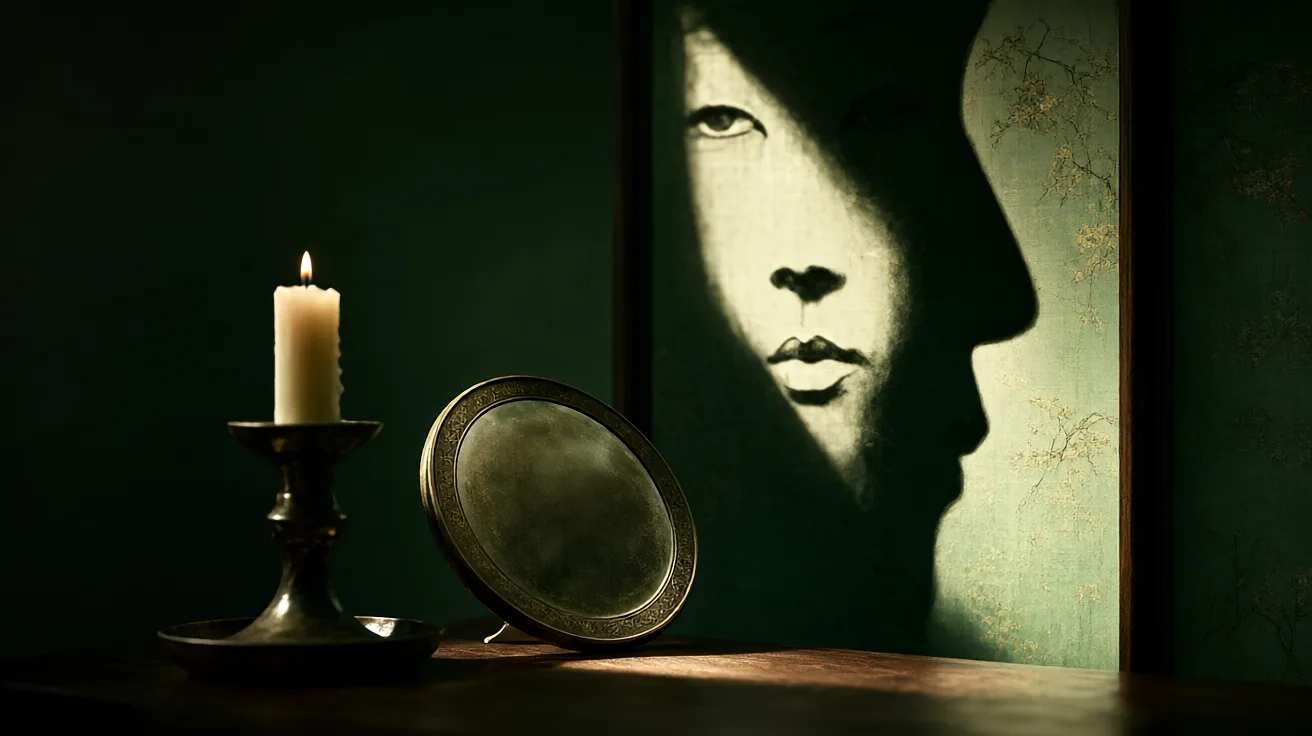
Traditional physiognomy emphasizes a 'full Heavenly Court' (forehead) and a 'spacious Bright Hall,' which is essentially an intuitive perception of facial light and shadow distribution. Top lighting casts deep shadows under the brows, nose wings, and cheekbones, making the 'bridge of the nose' appear low and the 'Bright Hall' narrow. Conversely, soft side lighting outlines the three-dimensional structure of the face, giving layers to areas that otherwise appear flat.
Underlighting (light from below) reverses normal shadow logic, visually distorting structures such as under-eye bags and nasolabial folds, potentially making individuals appear tired or stern. The same face might be misread as 'lonely or harsh' under top light, yet viewed as 'composed and steady' under side light. This visual bias caused by light and shadow directly interferes with an objective judgment of facial 'fullness' and 'recession.'
Light also affects color rendering, influencing judgment. Warm-toned light softens skin tone, masking subtle blemishes and making the face appear rosy and vibrant; cool-toned light may highlight skin texture, making the complexion appear pale or dull. Consequently, without a standardized light source, any definitive conclusions regarding 'complexion' lack stability.

Angle: The Proportion of the Three Stops Under Perspective Distortion
Traditional face-reading practice involves sitting facing south, keeping the line of sight level, at which point the observed proportions of the Three Stops (upper, middle, and lower) approximate the true structure. However, when the viewing angle changes to upward or downward, perspective principles cause visual distortion in facial proportions.
From a downward angle, the chin and neck area appear contracted due to greater distance, potentially making the 'lower stop' look short; from an upward angle, the forehead (upper stop) may appear to occupy a larger portion of the field of view. The distribution of facial features differs significantly between front and side views (such as a three-quarter profile). A profile view accentuates the prominence of the nose, while a frontal view emphasizes the width of the cheekbones.
Different shooting or observation angles lead to discrepancies in the division of the 'stops,' thereby affecting the interpretation of the overall physiognomic layout. In the digital age, lens focal length also introduces distortion; wide-angle lenses exaggerate edges, while telephoto lenses compress space. These optical characteristics differ vastly from observation via the human eye at physical distance.
Age: The Natural Flow of Soft Tissues and Bone
Physiognomy is not static. As the human body ages, changes in facial skeletal development, the accumulation or loss of soft tissues, and shifts in skin elasticity significantly alter facial contours. In youth, subcutaneous fat is thicker, making the face appear round and full; in middle age, fat loss makes the contours of the cheekbones and mandible more distinct, nasolabial folds deepen, and the face presents a different 'texture.'
The traditional concept that 'appearance follows the heart, and appearance changes with circumstance' suggests that a person's mental state and experiences are reflected in facial expressions and muscle habits. For example, prolonged emotional fluctuation may lead to tension in the frowning muscles, forming 'figure-8' wrinkles, which physiognomy might interpret as 'impulsive temperament' or 'a life full of twists and turns.'
This dynamic nature implies that a physiognomic snapshot from ten years ago cannot be compared with one from today; any static conclusion represents only a snapshot of a specific moment. The sagging of soft tissues due to aging shifts the facial center of gravity, while bone aging determines the stability of the underlying framework. Together, they construct a physiognomic map that flows with time.
How to View This in MysticFate
The 'Physiognomy' feature in MysticFate aims to provide users with a display and interactive experience of traditional cultural knowledge. The interface uses visualization layers to label traditional terms for areas such as the forehead, nose, eyes, and chin (e.g., Three Stops, Five Features), accompanied by concise cultural annotations to help users understand the basic terminology and conceptual framework of traditional physiognomy.
What users see is not a 'judgment' of fate by a machine, but a mapping of traditional knowledge graphs based on image input. The app highlights potential visual biases arising from current observation conditions (such as recommending uniform lighting and frontal angles), reminding users that these labels serve only as cultural references and should not be interpreted as deterministic predictions of personal future or health.
Through interactive exploration, users can switch between different lighting simulation modes to intuitively feel the impact of light and shadow on concepts like the 'Bright Hall.' This design not only enhances engagement but also deepens the educational significance of 'subjectivity of observation conditions,' guiding users to establish a rational cultural cognition amidst entertainment.
Common Misconceptions and Boundaries
Many users fall into the misconception of 'physiognomic determinism,' believing that a specific face shape or nose shape 'definitely' leads to wealth or poverty, or that a specific camera angle 'definitely' represents a lucky omen. This is incorrect and hazardous. As stated above, light and angle are sufficient to alter visual conclusions; therefore, no universal or absolute correspondence between fortune and misfortune exists.
Furthermore, usage boundaries must be strictly observed: the MysticFate physiognomy feature does not constitute a basis for medical diagnosis, legal advice, investment guidance, or psychological assessment. Changes in facial features may involve physiological factors such as skin diseases, allergies, or aging. If abnormalities are detected, one must consult a professional doctor rather than relying on physiognomic interpretations.
Physiognomy is merely a window for understanding traditional culture, not a ruler for measuring personal value. Elevating cultural interest into a life guide is not only a misuse of physiognomy but may also lead to unnecessary anxiety. Maintaining awareness of boundaries allows one to enjoy the fun of cultural exploration without being constrained by it.
Conclusion: Approach Tradition with Prudence
As part of intangible cultural heritage, the value of physiognomy lies in its embodiment of ancient wisdom regarding the observation of human nature and social relationships. When enjoying the physiognomy knowledge provided by MysticFate, we should maintain critical thinking, studying it as a cultural phenomenon rather than worshipping it as scientific truth.
Recognizing the variability of light, angle, and time helps break superstitions and understand the limitations of subjective interpretation. True 'good features' may not lie in the static combination of facial parts, but in a positive mindset and a healthy lifestyle. This is the inner strength that traditional culture teaches us, transcending physiognomy itself.
In this era of advanced digitization and technology, re-examining traditional physiognomy is not just nostalgia, but a reflection on self-awareness. By deconstructing the impact of observation conditions, we learn to view the complex relationships between people and their environment, and between people and time, with a more open and inclusive perspective.
Frequently Asked Questions
Why do MysticFate's annotated physiognomic features appear different in the same photo under varying light conditions?
Because light alters the distribution of facial shadows. Top lighting intensifies shadows under the eyes and nose, making the face appear concave or tired; side lighting highlights bone structure, making the face appear three-dimensional. The traditional emphasis on a 'bright hall' actually relies on lighting conditions; visual biases influence subjective judgment.
Do upward or downward camera angles lead to errors in physiognomic judgment?
Yes. Downward angles make the chin appear shorter, while upward angles make the forehead appear wider. The 'Three Stops' proportions in traditional physiognomy are based on visual standards of a frontal, level view. Angle deviations cause perspective distortion, altering the perception of facial proportions and leading to interpretive biases.
Can physiognomy predict a person's health status?
No. The MysticFate physiognomy feature is for displaying traditional culture only and does not have medical diagnostic capabilities. Facial skin conditions (such as wrinkles or pigmentation) may be influenced by age, genetics, or pathological factors. If there are health concerns, please consult a professional doctor.
Are physiognomic standards the same for young and elderly people?
No. Facial soft tissues sag or atrophy with age, resulting in different degrees of skeletal contour visibility. While tradition holds that 'appearance follows the heart,' physiological aging is an objective process. Applying physiognomic standards from youth to old age, or vice versa, leads to misinterpretations.
Go Deeper
This is the Fundamentals introduction. Future updates will add etymologies of key terms, differences among schools of thought, verifiable reference methods, and common misconceptions—following professional publishing standards.