
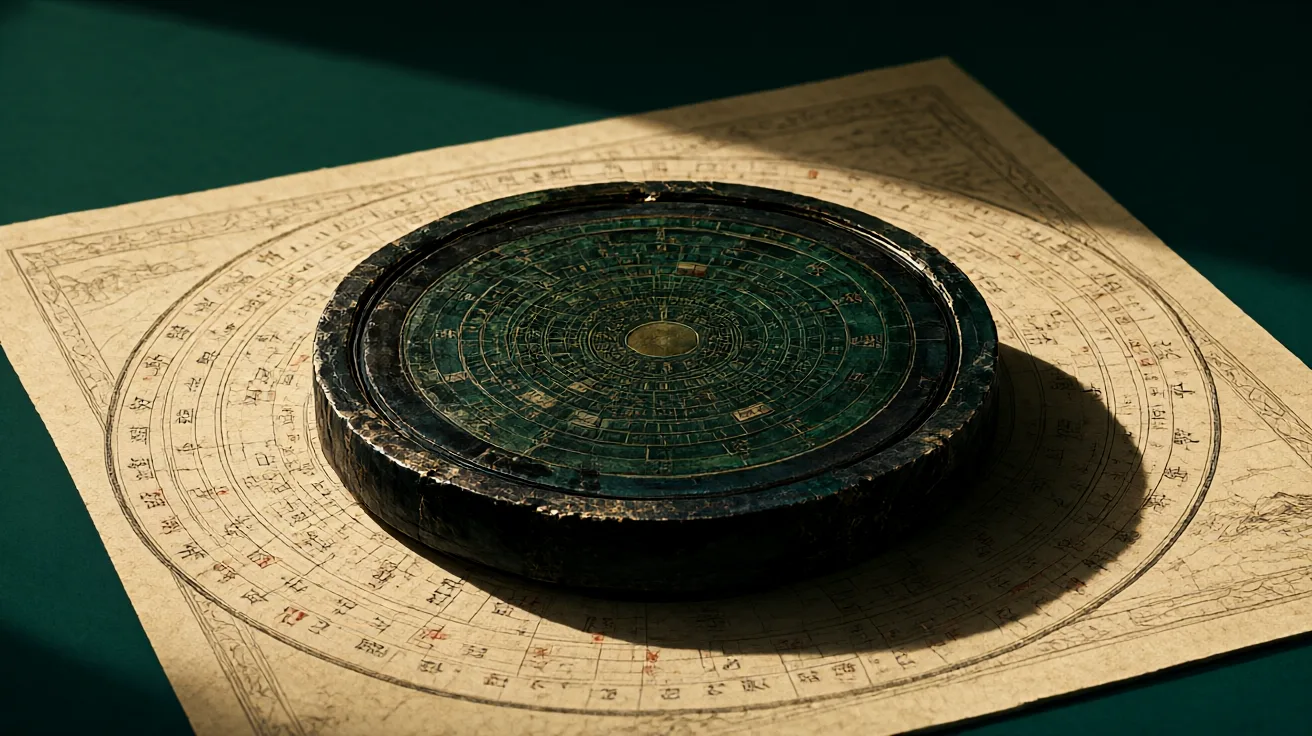
Introduction: The Two Major Schools of Traditional Feng Shui
Within the broad system of traditional Chinese Feng Shui, Eight Mansions and Xuan Kong Flying Stars are the two core schools with the widest reach and influence. While they share the ultimate goal of exploring the connections between architectural environments, geographical layouts, and human destiny, they differ fundamentally in their underlying logic, deductive paths, and philosophical bases. For beginners encountering Feng Shui knowledge, a common cognitive pitfall is the mistaken belief that these two methods can verify, complement, or be superimposed to seek a 'more perfect' conclusion. This approach often leads to logical confusion and practical indecision.
This article aims to systematically clarify the core distinctions between Eight Mansions Feng Shui and Xuan Kong Flying Stars, explaining why 'mixing' them is considered a major methodological taboo in traditional scholarship. By examining the unique methodological foundations of each, readers can view the reference information provided by modern Feng Shui tools more rationally and objectively. We should not seek absolute, black-and-white judgments of auspiciousness and inauspiciousness. Instead, we should establish a scientific cognitive framework to understand the limitations of different models within specific dimensions, thereby avoiding the pitfalls of blind superstition or mechanical application, and truly mastering the essence of traditional wisdom.
Eight Mansions: Static Orientation and Eight Wandering Star Matching
The Eight Mansions method, also known as Eight Mansions Feng Shui, is theoretically centered on 'stillness' and 'fixedness.' It regards the house's sitting orientation as the sole decisive variable, categorizing residences strictly into two basic types: East Four Houses and West Four Houses, based on the trigram associated with the sitting mountain. On this basis, the method deduces the distribution of the Eight Wandering Stars within the house. These eight stellar influences are: Fu Wei, Sheng Qi, Yan Nian, Tian Yi, Huo Hai, Liu Sha, Wu Gui, and Jue Ming. The positions of these stars within the residence are fixed, forming a closed and stable spatial model.
The Eight Mansions method places extreme emphasis on the principle of 'matching destiny to house,' advocating that 'East Four destinies should match East Four houses, and West Four destinies should match West Four houses.' In this system, the passage of time does not alter the auspicious or inauspicious layout within the house; whether a residence is a century-old home or a newly built building, the spatial distribution and attributes of the Eight Wandering Stars remain unchanged. This static structuralist model is particularly suitable for analyzing long-term residential layouts, selecting basic directions based on auspiciousness and inauspiousness, and assessing compatibility between personal Ba Zi destiny trigrams and house orientations, providing a relatively stable perspective on environmental evaluation.
However, it is precisely this static nature that renders the Eight Mansions method ineffective when dealing with dynamically changing environmental energies. It focuses more on the static compatibility between spatial structure and personal destiny rather than the flow and fluctuations of energy fields over the dimension of time. Therefore, when applying the Eight Mansions method, one should focus on long-term residential stability and basic directional layout, avoiding the application of its conclusions to short-term fortune fluctuations or specific matters that require judgment based on annual Flying Stars, thus maintaining logical purity.
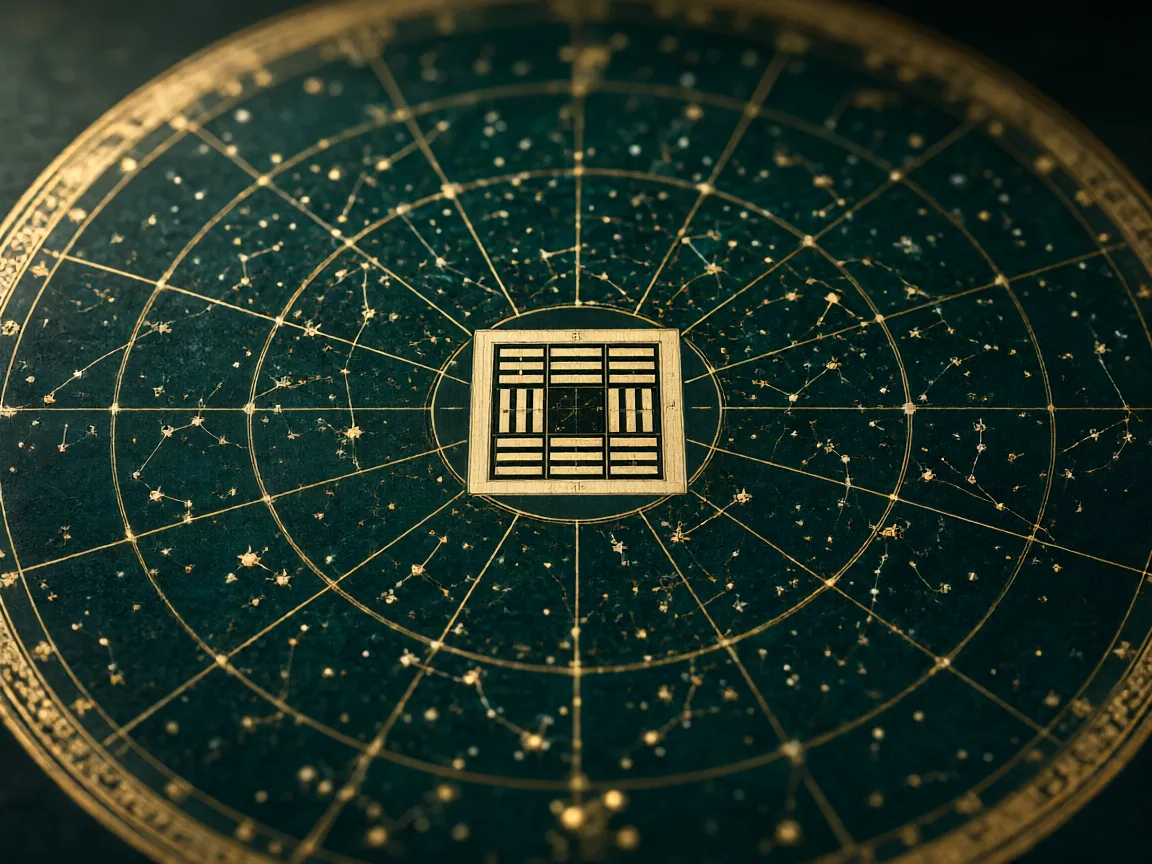
Xuan Kong Flying Stars: Dynamic Deduction of Time Elements
In contrast, the core of the Xuan Kong Flying Stars method (encompassing Xuan Kong Da Gua and the Flying Stars school) lies in 'movement' and 'time.' It creatively introduces the concept of 'Yuan Yun' or Time Elements, dividing time into Three Yuan and Nine Yun, where each twenty-year cycle represents a specific Time Element with designated 'ruling stars.' Using time as the axis and combining it with the house's orientation, the Xuan Kong method deduces the flying paths of Mountain Stars, Facing Stars, and Period Stars within the Lo Shu Nine Palace grid, forming complex spatiotemporal combination models.
In the Xuan Kong system, auspiciousness and inauspiciousness are dynamic and change over time. For example, a certain orientation might form a 'Double Stars Meet at Facing' prosperous layout during the Eighteen Yun, benefiting wealth; however, during the Nineteen Yun, the same orientation might shift to a 'Mountain Water' declining layout due to stellar changes, or even present overlapping inauspicious stars. This dynamic model focuses on the flow of energy fields, the alternation of prosperity and decline, and energy interactions within specific time periods. It represents a deep integration of historical and temporal dimensions in Feng Shui, forming a stark contrast to the static spatial logic of Eight Mansions.
The complexity of Xuan Kong Flying Stars is further reflected in its characteristic of 'same orientation, different Time Elements.' Even if two houses have exactly the same orientation, if their construction or occupancy times span different Time Elements, the flying star combinations within their nine palaces will be completely different, leading to significant disparities in auspicious and inauspicious directions. Therefore, using the Xuan Kong method requires precision to specific time slices; one cannot simply apply past conclusions but must perform independent deductions based on the current Time Element.
Why Conclusions May Contradict Each Other
Due to differences in theoretical foundations and methodology, the judgments of auspiciousness and inauspiciousness made by Eight Mansions and Xuan Kong for the same orientation often diverge sharply or even contradict completely. For instance, the Eight Mansions method might designate the 'Tian Yi' position of a house as the southeast, recommending the placement of a study or bedroom there to boost health; whereas, the Xuan Kong Flying Stars method might point out that the southeast direction currently has the 'Five Yellow Lian Zhen' star flying in, which is a highly inauspicious omen, and recommend maintaining stillness, avoiding construction work, or conducting important activities in that area.
If users blindly mix the two systems, they will face a dilemma: should they follow the static layout advice of Eight Mansions or the dynamic timing judgment of Xuan Kong? Traditional Feng Shui masters usually advocate 'specialization in technique,' often selecting only one system for in-depth analysis in a specific case or making strict choices based on specific school rules, rather than simply superimposing conclusions from both sets. Mixing them leads to the loss of logical coherence, resulting in internal contradictions that render final suggestions inoperable.
Additionally, the 'auspicious stars' in Eight Mansions focus on the auspicious directions among the Eight Wandering Stars, while the 'prosperous stars' in Xuan Kong focus on the ruling stars of the current Flying Star period. The energy attributes and calculation methods of the two are fundamentally different. Equating the 'Sheng Qi' of Eight Mansions with the 'Prosperous Star' of Xuan Kong is a common conceptual confusion. Understanding this essential difference is key to avoiding erroneous applications.
How to Interpret in MysticFate
In the Feng Shui tool module of the MysticFate App, the Eight Mansions Wandering Stars and the Xuan Kong Flying Stars charts are presented as two independent and non-interfering functional blocks. After users input the orientation, they can view the analysis results of these two systems separately. The interface clearly indicates whether it is currently displaying 'Eight Mansions Mode' or 'Xuan Kong Mode,' avoiding user confusion through clear visual distinctions and helping users understand which logical system the displayed data belongs to, thus enabling rational judgment.
It must be emphasized that the App displays model deduction results based on traditional theories, not deterministic predictions of the future or absolute truths. It provides references for directional auspiciousness and inauspiousness from the perspective of traditional culture, aiming to help users understand the historical wisdom and cultural context of environmental layout. Users should regard it as a cultural experience and decision-making reference, not as absolute legal, medical, or investment advice.
When using MysticFate, users are advised to select the corresponding module based on their specific needs: if focusing on long-term residential layouts and destiny matching, prioritize the Eight Mansions module; if focusing on annual fortunes, recent adjustments, and temporal energy, prioritize the Xuan Kong module. Always remember that the tool is a medium to assist thinking, not a machine to replace human judgment.
Common Misconceptions and Boundaries
Common misconceptions include believing that 'more auspicious positions are better' or that 'a certain layout guarantees wealth.' Feng Shui is essentially a cultural model of probability and energy, exploring the potential impact of environments on human psychology and behavior; it does not offer absolute guarantees for specific life events. Another misconception is ignoring school differences, directly equating 'Sheng Qi' of Eight Mansions with 'Prosperous Star' of Xuan Kong, when in fact their meanings are entirely different: the former is based on trigram interactions, while the latter is based on Lo Shu flying arrangements and Time Elements.
In terms of usage boundaries, it must be clear that Feng Shui tools cannot replace professional advice in specialized fields. When facing health issues, financial matters, or major life decisions, one should first consult professionals such as doctors, lawyers, or financial advisors. Optimizing the Feng Shui environment is more about creating psychological comfort zones, spatial aesthetics, and cultural ritualistic feelings, rather than serving as a universal key to changing fate.
Maintaining rationality and avoiding superstition regarding absolute judgments of auspiciousness and inauspiciousness is key to correctly using traditional cultural tools. Feng Shui should be viewed as an auxiliary tool of environmental psychology, helping people better perceive their environment and adjust their mindset, not as an excuse to escape reality. Only by clarifying these boundaries can its positive significance be maximized.
Conclusion: Viewing Traditional Culture Rationally
Eight Mansions and Xuan Kong Flying Stars: one is a static slice of spatial structure, the other a dynamic image of the river of time. They are like two different lenses, recording the state of the same building from different dimensions. Understanding their differences is the only way to truly respect the complexity of traditional wisdom and avoid simplified interpretations.
Exploring Feng Shui in MysticFate is not just about finding directions, but about experiencing how ancients understood the world through trigrams and numerical models. Maintaining an open yet prudent mindset, viewing Feng Shui as a form of environmental aesthetics and philosophical thought rather than magic to change destiny, allows one to gain true cultural and psychological value from it.
Ultimately, the significance of Feng Shui lies in providing a perspective for harmonious coexistence with the environment, helping us find inner peace and order in a complex world. Rational application and acting within one's capabilities are the right path.
Frequently Asked Questions
Can Eight Mansions Feng Shui and Xuan Kong Flying Stars be used together?
It is not recommended to mix them. The two have different theoretical foundations, and their conclusions often contradict each other. Traditionally, it is suggested to choose one system for in-depth analysis of the same case or follow the selection rules of a specific school, avoiding the logical confusion caused by superimposing conclusions from both.
Why is the same orientation auspicious in Eight Mansions but inauspicious in Xuan Kong?
Because Eight Mansions emphasizes static matching of the sitting mountain trigram, while Xuan Kong emphasizes dynamic Time Element Flying Star combinations. The addition of the time dimension causes auspiciousness and inauspiciousness to change with the twenty-year cycles, leading the two systems to make opposite judgments in specific spatiotemporal contexts.
Can the MysticFate Feng Shui tool predict that I will definitely become rich in the future?
No. The Feng Shui tool provides references for directional auspiciousness based on traditional theories, which belong to cultural model deductions; it does not guarantee any specific economic, health, or life outcomes. Please do not use it as a basis for investment decisions or medical advice.
If one does not understand the differences between schools, how should they choose which chart to view?
Generally, it is recommended to use Xuan Kong Flying Stars, which has high time relevance, as the primary reference because it considers the current Time Element; or use Eight Mansions matching the resident's Ba Zi as an auxiliary. However, the most important point is not to simply add the 'auspiciousness' of both, but to understand their independent logical boundaries.
Go Deeper
This is the Fundamentals introduction. Future updates will add etymologies of key terms, differences among schools of thought, verifiable reference methods, and common misconceptions—following professional publishing standards.