
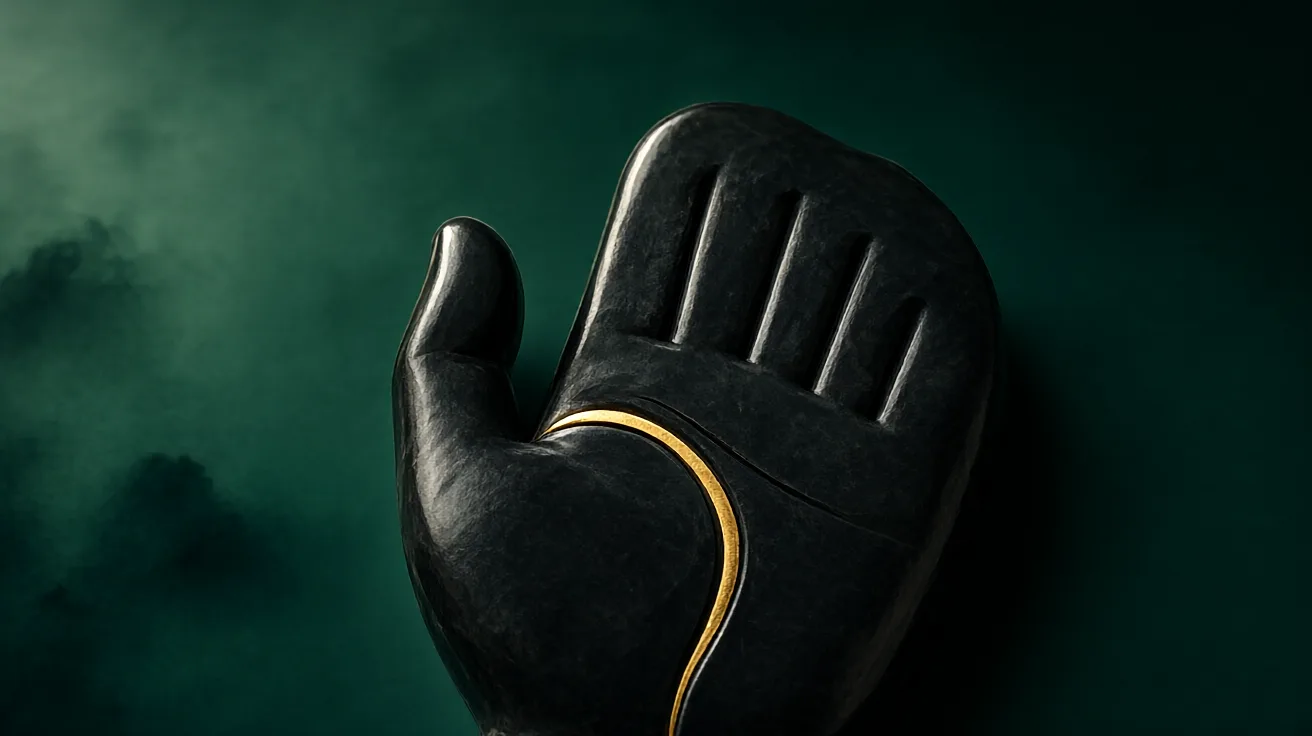
Traditional Positioning of the Life Line
Within the context of East Asian traditional culture and folk palmistry, the life line is a major arc of palm lines encircling the base of the thumb (below the Mount of Venus). It originates between the index finger and the thumb, typically extending downward to envelop the thenar eminence. Ancient texts often regarded it as a line reflecting an individual's innate endowment and foundational vitality, symbolizing the initial state of one's life force.
It must first be clarified that the 'life line' in traditional theory has never been a 'marker of the end of life' in the modern medical sense. It is more of a symbolic empirical generalization, representing the strength or weakness of an individual's vitality, the thickness or thinness of their constitution, and the flourishing or declining state of essence, qi, and blood, rather than a quantitative prediction of physiological lifespan.
From the perspective of cultural anthropology, this line has been imbued with rich metaphorical significance. Ancient people, through observing the morphology of palm lines, attempted to establish correlations between external physical appearances and internal health conditions. These correlations are based on long-term experiential accumulation rather than strict scientific evidence. Therefore, when understanding the life line, it should be placed within the framework of traditional cultural symbol systems, avoiding the direct application of modern biomedical logic.
Non-Correlation Between Line Length and Lifespan
Many beginners hold a common misconception that the longer the life line, the longer the lifespan, and conversely, that a short line suggests premature death. This linear correlation logic does not hold within serious traditional physiognomy systems. Lifespan is determined by a complex interplay of factors including genetic inheritance, growth environment, medical conditions, lifestyle, and socio-historical background.
Palm lines are merely the natural result of skin texture formation during the body's growth process. They may be influenced by genetics but are by no means a 'progress bar' for lifespan. An individual with a short but deeply and clearly defined line often possesses greater daily vitality than one with a long but blurred and broken line. Therefore, the physical length of the line must never be equated with the physical length of time.
Furthermore, the morphology of palm lines undergoes subtle changes with age, stress, and health status. This dynamism indicates that palm lines are records of the life process rather than verdicts of fate. Emphasizing the core position that 'Line ≠ Lifespan' aims to correct the overly simplistic fatalistic thinking in folklore, guiding users to focus on current quality of life rather than illusory lifespan figures.
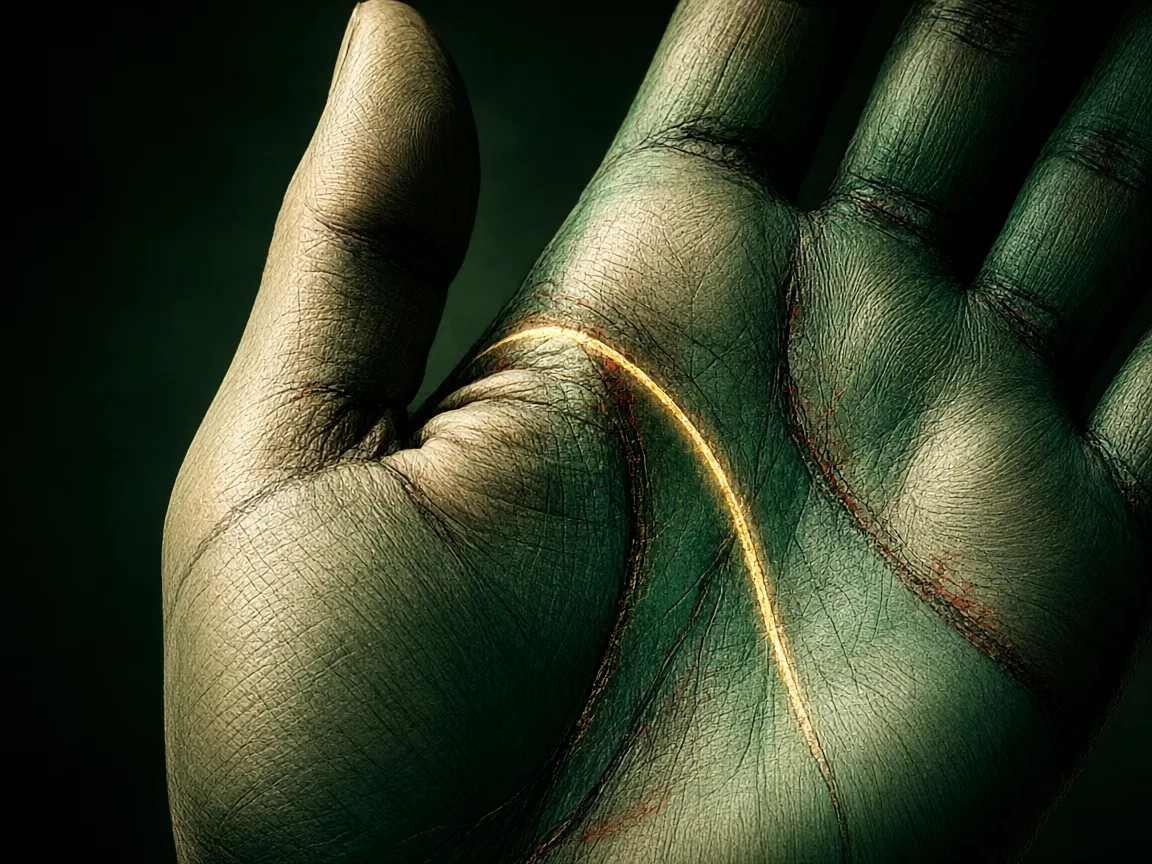
Semantic Flexibility of Interruptions and Branches
When obvious interruptions, island marks, or branches are observed on the life line, traditional interpretations typically point to fluctuations in state or turning points in constitution during a specific phase of life. For example, changes in lifestyle rhythm, irregular schedules, or energy depletion caused by emotional stress during a certain period may leave imprints on the palm lines.
This does not mean that the individual will 'definitely' encounter a major accident or illness in a specific year. These changes in line patterns are more often mirrors of physical and mental states, indicating that the owner needs to focus on regulation and recuperation during that phase. Absolutizing line features into specific disaster predictions violates the core 'change' principle of I Ching philosophy and exceeds the reasonable scope of traditional cultural education.
In traditional schools, interpretations of interruptions also vary. Some schools view this as a signal of energy loss, while others regard it as a marker of life cycle transition. This semantic elasticity reminds us that palm line interpretation should be open and contextual, rather than rigid dogma. It serves more as an opportunity for self-reflection than as a basis for judging others.
Differences in Schools and Version Iterations
It is worth noting that interpretations of the life line vary significantly across different historical periods and regional schools. Palmistry diagrams from the Ming and Qing dynasties emphasized 'thickness/thinness and depth/shallowness,' while modern circulating versions may focus more on 'direction and arc.' Some folk legends even endowed certain special line patterns with mystical colors, leading to fragmented information.
As cultural researchers or enthusiasts, one should recognize that there is no universal 'iron rule' for the life line. Different editions of classics emphasize different aspects of the same line pattern. Therefore, when understanding them, we should adopt the common ground, which is to focus on the harmony of overall vitality, rather than obsessing over the absolute auspiciousness or inauspiciousness of a specific local feature.
In addition, with the evolution of media, palmistry knowledge has shifted from oral transmission to textual diagrams, and then to digital tools. In this process, some details have been simplified or misread. Clarifying differences among schools is not only for academic rigor but also to maintain independent judgment amidst diverse information, avoiding being misled by the authoritative narrative of a single version.
How to View It in MysticFate
In the [Palmistry] interface of MysticFate, the system automatically identifies and marks the position of the life line based on the palm image you upload. The highlighted arcs displayed on the interface are designed to assist users in intuitively locating this line pattern. Its initial design intention is as an educational visualization tool to help beginners understand the basic layout of traditional palm lines.
When viewing, please focus on the descriptions regarding 'vitality state' in the prompts, rather than attempting to find 'lifespan figures.' The output content of MysticFate strictly adheres to the boundaries of traditional cultural education. It provides morphological references based on traditional diagrams, aiming to guide users in understanding the traditional associations between line patterns and constitution/vitality, and never generates any form of medical diagnosis or lifespan prediction conclusions.
When using this feature, users should regard the results as a reference for cultural experience and self-reflection. The system describes results using traditional terminology but consistently emphasizes their symbolic significance. This design both respects the historical context of traditional palmistry and conforms to the rational boundaries of modern technological products, ensuring that users acquire knowledge without generating misunderstandings or dependencies.
Common Misconceptions and Boundaries
The greatest misconception lies in confusing 'cultural symbols' with 'scientific facts.' Palmistry belongs to the intersection of traditional culture and folk psychology. Its value lies in providing perspectives for self-reflection and metaphors for physical and mental regulation, not in replacing modern medicine or determining the course of fate.
The boundary that must be strictly adhered to is: no interpretation based on palm lines can be used to confirm diseases, predict specific times of death, or serve as the sole basis for major life decisions (such as medical, investment, or legal matters). Observing changes in palm lines should be viewed as a signal for self-checking one's living state. It is recommended to combine professional medical examinations and healthy lifestyle adjustments, and never to blindly believe in the absolute warnings of line patterns.
Additionally, one should be wary of the tendency to over-entertain or over-anxiously interpret palm lines. The correct attitude is to use it as one of the auxiliary tools to understand one's own energy state, rather than as the sole guiding principle for life. Maintaining a sense of boundaries is both a respect for the original intent of traditional culture and a necessary measure to protect user psychological health.
Rational Reflection and Cultural Inheritance
The ultimate purpose of learning traditional palmistry terminology is not to create anxiety or seek fatalistic comfort, but to understand how the ancients observed internal states through external physical appearances. This wisdom of 'observing the outside to know the inside' still has reflective value in the contemporary context, reminding us to pay attention to daily energy management and physical and mental balance.
In the user experience of MysticFate, maintaining a rational and open-minded attitude is crucial. We appreciate and understand palm lines as part of traditional culture, neither completely denying their folk value nor deifying their predictive capabilities. By clarifying the true meaning of the life line, we can better inherit this ancient knowledge system in the modern context, avoiding misinterpretation and abuse.
Ultimately, the value of palmistry in the contemporary era is more reflected at the levels of cultural education and psychological regulation. It provides a language for dialogue with the body, helping users pause and reflect on their own state amidst daily busyness. By examining traditional symbols from a rational perspective, we can retain a sense of respect and prudence for ancient wisdom in the era of technology.
Frequently Asked Questions
Does a Short Life Line Mean a Short Lifespan?
No. In traditional palmistry, the length of the life line primarily reflects the strength of vitality and physical constitution, not the length of lifespan. Lifespan is determined by multiple modern factors such as genetics, environment, and medical care. Palm lines are merely a cultural symbol in the traditional experiential model and cannot be directly converted into time length.
Can MysticFate Predict Whether I Will Be Healthy in a Specific Year?
No. The palmistry feature of MysticFate is for traditional cultural education only, displaying morphological references of the life line. It does not provide any definitive health predictions, disease diagnoses, or lifespan interpretations. If you are concerned about health, please consult professional medical personnel.
Does an Interruption in the Life Line Mean a Major Disaster Will Occur This Year?
This is a common misconception. In traditional interpretations, interruptions or island marks usually represent fluctuations in state, energy depletion, or changes in lifestyle during a certain phase of life. It is a hint of 'change,' not an absolute disaster prediction. It suggests focusing on physical and mental regulation in the current period, rather than fearing specific events.
Why Do Different Books Have Different Sayings About the Life Line?
Palmistry has formed multiple schools during its historical evolution, and there are differences in regional folk versions, with emphases ranging from 'thickness' to 'direction.' As cultural knowledge, one should understand its diversity and limitations, adopt the strengths of various schools to focus on overall vitality, rather than adhering to the absolute interpretation of a specific version.
Go Deeper
This is the Fundamentals introduction. Future updates will add etymologies of key terms, differences among schools of thought, verifiable reference methods, and common misconceptions—following professional publishing standards.